I have camped with solar for about six years, most of it in a 2016 travel trailer that is 21 feet long and towed by my pickup truck, and I have made just about every mistake the learning curve has to offer. I started with a single small panel and a portable power station, added a second panel when the first one could not keep up, and finally switched to the DOKIO 200W folding panel for most trips. I camp from late spring to mid fall, mostly in state parks and on boondocking spots in the Northeast, and I run a small 12V fridge, LED lights, and a fan for the dogs on warm afternoons. That list of loads is the whole reason wattage matters to me. If you are trying to decide between the DOKIO 200W folding panel and the Renogy 100W portable panel, the short answer is this: the DOKIO gives you roughly twice the charging capacity in one folding package, and the Renogy gives you a lighter, smaller panel that is easier to move around. Which one fits your camping depends on what you actually want to run.
I bought a 100W panel first, and I do not regret it, because it taught me what I needed. But I also spent money twice, which is what I want to save you from. I have blown a fuse in my trailer, I have come back to a dead house battery on a cold October night, and I have read more spec sheets than I care to admit. The first time I hooked a panel up wrong, I blew a fuse and spent an afternoon tracing wires instead of sitting by the fire. That is the kind of lesson you only need to learn once. So let me walk through the real trade-offs: what each panel does well, where each one falls short, and which camper should buy which.
| DOKIO 200W Folding Panel | Renogy 100W Portable Panel | |
|---|---|---|
| Rated output | 200W rated, 18V max, 6.1A output | 100W rated output |
| Cost of entry | Higher upfront, more capacity for the money | Lower upfront, easier to start |
| Weight | 9.7 lb folding package | Lighter, easier to move by hand |
| Packed size | Folds to about 20 x 27 x 1.1 in | Smaller folded footprint |
| Cable reach | 9.84 ft cable, keeps the controller shaded | Cable length varies by version |
| Battery protection | PWM controller guards against reverse polarity, overcharge, and overload | Controller setup varies by kit |
| Panel type | Monocrystalline silicon | Monocrystalline on most versions |
| Best for | Running a fridge, lights, fan, and a power station | Topping off a small battery on short trips |
Where the DOKIO 200W Wins
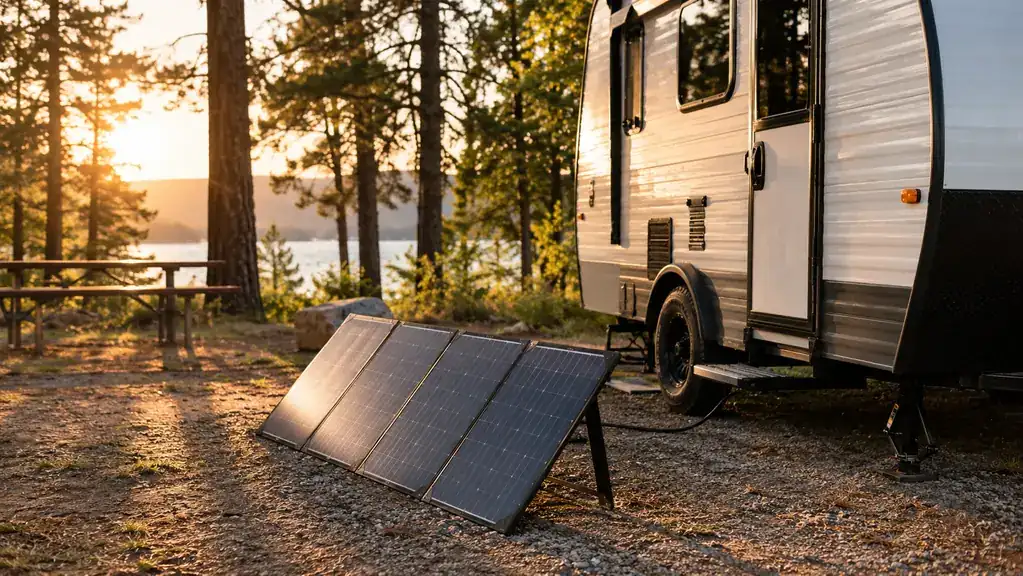
The DOKIO wins on raw charging capacity, and that matters more than most people expect. The panel is rated at 200W, with a maximum voltage of 18V and 6.1A of output, and it feeds a 12V DC system, which is exactly what my trailer battery wants to see. On a normal sunny day, that is enough to run my small 12V fridge, the LED lights, a fan for the dogs on warm afternoons, and still put a charge back into the house battery. My little fridge cycles on and off all day, and it is the single biggest draw in the trailer, so having charging headroom is not a luxury, it is the whole point. I tested it one weekend in late June at a state park in the Northeast, the kind of weekend where the sky is clear until about two in the afternoon and then the clouds roll in. My old 100W panel would have spent the cloudy part of the day barely keeping up. The DOKIO kept the fridge cold, the fan running, and the battery above 12.4V by the time I went to bed. I also ran a low-wattage slow cooker for a few hours one evening, which is the kind of luxury I never tried with the smaller panel. The year before that, with my first 100W panel, I came back from a hike to find the fridge light blinking and the battery low enough that I had to run the truck to charge it. That is the moment I started shopping for a bigger panel, and it is the reason I now tell people to buy more watts than they think they need.
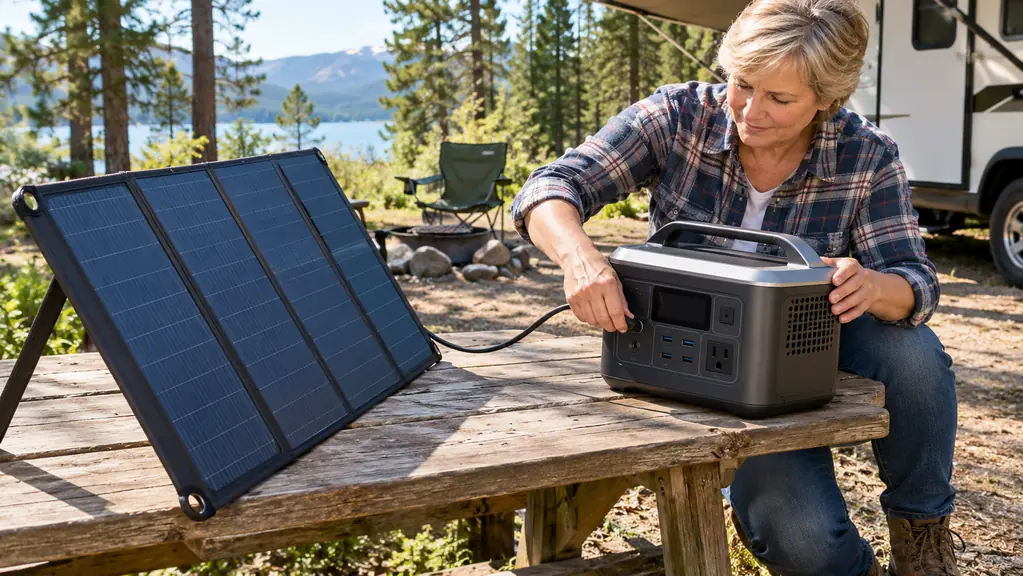
The DOKIO also wins on the cable and the controller. The 9.84 ft cable is a small detail that makes a big difference at a campsite. You can put the panel in full sun and keep the controller and your power station in the shade, which matters when the only sunny spot is twenty feet from your trailer. The included PWM controller protects your 12V system against reverse polarity, overcharge, and overload. I have killed a battery by hooking things up wrong, and a controller that watches for those mistakes is worth a lot to me. The panel folds to about 20 by 27 by 1.1 inches, weighs 9.7 lb, and comes with a bag, so it rides in the back of my pickup without taking up the whole bed. The monocrystalline silicon cells are the same technology most good panels use, and the listing rates the panel for temperatures up to 175 degrees Fahrenheit, which has never been a problem even on the hottest July days I have camped in. The connectors cover the bases too: SAE to XT60, alligator clips, and DC, so I can hook it to my power station or straight to the battery. On a trip in August, I ran the alligator clips straight to the trailer battery because my power station was already full, and it worked exactly the way I hoped.
There is one more thing the DOKIO does that surprised me, and it is the folding design itself. The panel is described as lightweight, ultra-thin, and foldable, and that is not marketing talk. When it is folded, it is slim and easy to carry, and it stands up to being tossed into the truck bed, leaned against the trailer, and carried with one hand under my arm. The included bag keeps the cable and connectors together, which sounds small until you have dug through a truck bed looking for an alligator clip. I have had folding panels before that felt flimsy at the hinges. This one has held up through two seasons of regular use, including one trip where I set it up in a gusty meadow and had to chase it across the grass when the wind caught it. It still charges fine.
Where the Renogy 100W Wins
The Renogy 100W portable panel wins on weight and maneuverability. At half the rated output, it is also noticeably lighter and easier to carry. If you are hiking a panel to a sunny spot, or if you camp with a small power station and only need to top it off, the Renogy is the more sensible choice. I have carried a 100W panel from a shaded campsite to a sunny clearing, and I appreciated every pound I did not have to haul. There have been trips where the only sunny patch was a hundred feet from the trailer, and on those trips a lighter panel is a genuinely better tool. The DOKIO is not hard to move, but at 9.7 lb it is a two-hand job, and when I am packing up camp in a hurry, I notice the difference. One morning in July, I moved my old 100W panel three times before noon, chasing the sun around the trees, and I never once wished it were heavier. With a small load, you do not have to chase the sun the same way, which is another reason the lighter panel is easier to live with.
The Renogy also wins on the cost of entry, though I am not going to quote numbers here. A 100W panel is a smaller purchase than a 200W panel, and for someone who only needs to charge a phone, a small fan, and a laptop, that is the right trade. The DOKIO is the better value per watt, but only if you actually use the extra watts. If you do not need them, the Renogy is the honest pick. I also think a 100W panel is the right size for someone who is still learning what they actually use at camp. My first 100W panel taught me how to read a battery monitor, how to aim a panel at the sun, and how much power a fridge really draws. That education is worth something, and you can get it with a panel that is easier to handle and easier to store. When I outgrew mine, I passed it to a friend who camps with a rooftop tent, and it is still running her phone and her lights. She is exactly the camper the Renogy is built for: one person, small loads, and no interest in becoming a solar hobbyist.
There is a less obvious way the Renogy wins, and it is about how you camp when you are not hooked up to anything. On short trips, a single night or a quick overnight at a state park, I do not need the full output of the DOKIO. I need enough to top off my power station and keep my phone charged. A 100W panel does that without taking up much room, and it sets up in about a minute. There is something to be said for a panel you can throw on the picnic table while you make coffee and have it earning its keep before breakfast. The DOKIO is a bigger commitment to set up, and on a one-night stop I sometimes leave it in the truck.
The DOKIO 200W Folding Panel Is the One I Reach For
If you want one panel that can run a fridge, top off a power station, and keep your trailer battery healthy on a long weekend, this is the one. It folds flat, weighs 9.7 lb, and the controller does the worrying for you.
Amazon Check Today's Price on Amazon →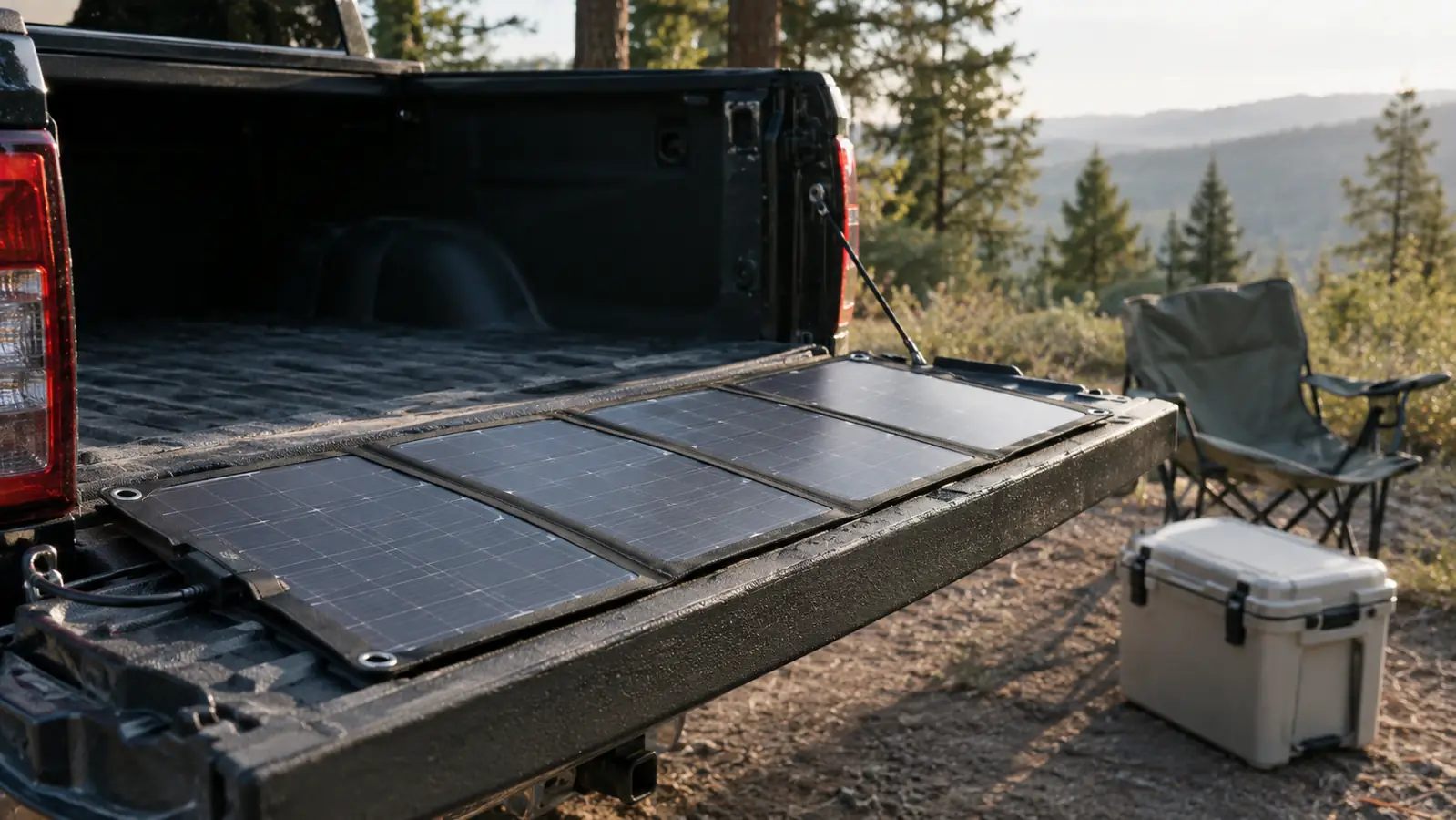
Who Should Buy Which
Buy the DOKIO 200W if you camp in one spot for a few days, run a fridge, want to keep a house battery healthy, or you are tired of rationing power. Buy the Renogy 100W if you mostly top off a small power station, move camp often, or you are just starting out and want a lighter way to learn solar. I started with a 100W panel, and that was the right way to start. Then I outgrew it. That is not a knock on the Renogy. It is a statement about how my camping changed. I cook most meals at camp, I run a small fridge, and I like having the fan going for the dogs on warm afternoons. That adds up to a load that a 100W panel cannot carry for long. If your list of loads looks like mine, buy the watts. If your list is shorter, buy the lighter panel and enjoy the easy mornings. I am not going to tell you that one panel is better than the other in every way, because that would be a lie. They are different tools for different trips.
If you are still deciding, think about the worst case. On a cloudy day, a 200W panel still delivers meaningful charging, while a 100W panel might only give you a trickle. For me, that margin is the difference between a comfortable weekend and a cold one. I camp from late spring to mid fall, mostly in state parks and on boondocking spots in the Northeast, and the weather does not always cooperate. There was a trip in September where it rained for two days straight. The DOKIO, propped at an angle against the picnic table, caught enough of the occasional break in the clouds that I never had to start the truck to charge the battery. I am not sure my old 100W panel would have done the same. If you camp where the sun is reliable, you can get away with less. If you camp where I do, buy the margin.
One more consideration: the DOKIO is not a panel you will outgrow. I have had mine for two seasons, and my setup has grown around it. I added a second battery to the trailer and a few more loads, and the DOKIO still keeps up. The Renogy is a panel you buy for where you are today. The DOKIO is a panel you buy for where you will be in two years. If you are the kind of person who likes to grow into your gear, that is worth a lot. If you prefer to buy exactly what you need and no more, the Renogy is the more honest choice. Both are good panels. They are just answering different questions.
Still Not Sure? Start With the DOKIO 200W
The DOKIO gives you room to grow. If you only need 100W today, you can use it at partial output. If you need the full 200W next season, it is already in your hands.
Amazon Check Today's Price on Amazon →