
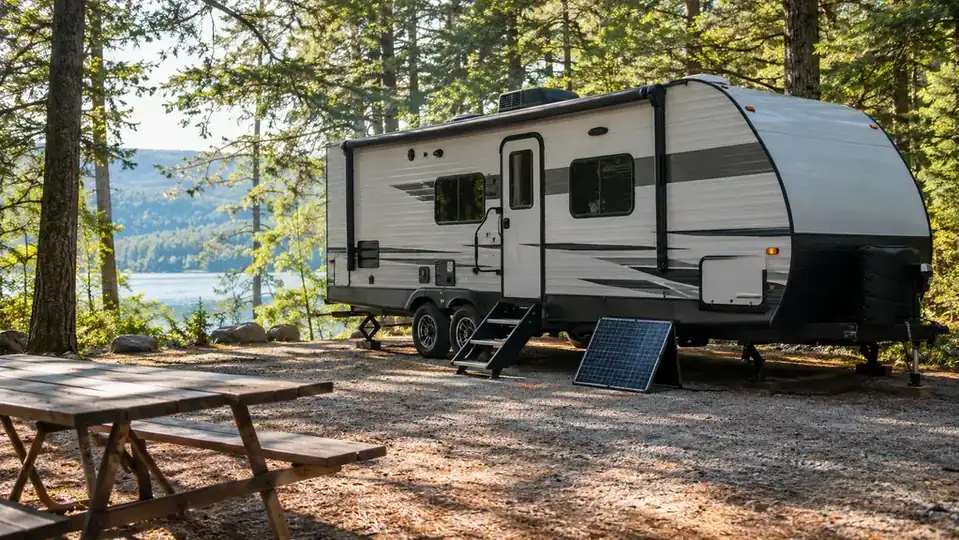
Six years ago I killed a house battery on a cold October night in a Vermont state park. I woke up to a trailer that smelled like a blown fuse and a phone at 4%. That was the night I stopped pretending I could run a campsite on guesswork. The Jackery Explorer 300 was the first portable power station I bought after that, and it has been in the back of my truck for every trip since. This is the long-term review I wish someone had handed me before I spent a winter reading spec sheets.
I am Joanne. I retired from turning wrenches on school buses, and I now spend late spring through mid fall camping in a 21-foot trailer with two dogs and a cat. My solar setup has grown over the years, but the Jackery Explorer 300 still rides along on every trip. Here is what it actually does after six seasons, what it will not do, and the honest verdict from someone who has run it hard.
The Quick Verdict
A lightweight, dead-simple power station that has handled six seasons of weekend and week-long trips without a hiccup. It runs phones, tablets, a small fan, lights, and a CPAP overnight. It will not run a fridge or a coffee maker, and that is fine, because it never claimed it would.
Amazon Check Today's Price →The Power Station I Trust With a Cold Night in the Trailer
Six seasons in, the Jackery Explorer 300 is still the first thing I pack. It weighs 7.1 pounds, charges in about 4 hours from the wall, and has never once left me sitting in the dark.
Amazon Check Today's Price on Amazon →How I've Used It
The Explorer 300 lives in my truck, not in a closet. On a typical trip it runs the small 12V fan for the dogs on warm afternoons, charges my phone and my tablet overnight, and keeps a string of LED lights going at the picnic table. On cooler nights it runs my CPAP from sundown to sunrise without complaint.
My trailer has its own battery and a solar panel on the roof, but the Jackery does a different job. It is the second string. When the trailer battery gets low after a couple of cloudy days, the Jackery takes over for the essentials. When I want to sit away from the trailer with my coffee and my book, the Jackery comes with me. It is the difference between planning my day around power and just living it.
I have also used it as a jump bag for the truck on a trip when the pickup sat for nine days in the rain. The 120W car port handled that job. I have used it at the workbench at home to run a small soldering iron, and I have used it to keep the cat's heated pad going during an early frost. It is not a whole-house backup. It is a workhorse that does exactly what I ask of it.
What the Specs Actually Mean in Camp
The numbers on the box tell you less than the numbers you generate yourself. The Jackery Explorer 300 holds 292Wh of capacity, which is the amount of power it can store. It delivers up to 300 watts of continuous AC power, which tells you what you can plug into it. The first number says how long things last. The second says what things can run at all. Both matter, and neither one tells the whole story.
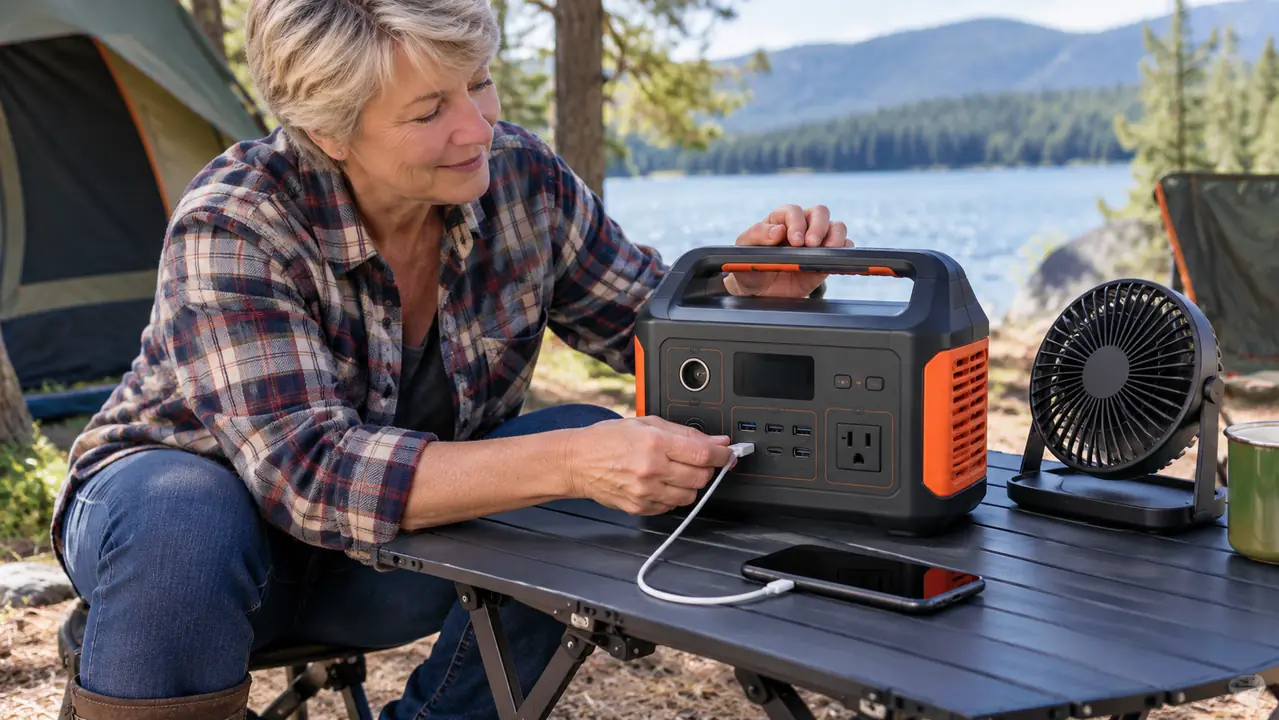
For me, the useful number is the weight. At 7.1 pounds, this is the power station I actually carry. I have owned bigger units that stayed in the truck because I did not want to lug them to the picnic table. The Explorer 300 goes everywhere. It sits on the camp table, rides in the kayak hatch, and comes into the tent when the dogs decide they need company. I measured it once out of curiosity: 15.43 inches deep, 9.92 inches wide, and 11.89 inches tall, which is about the size of a lunch box with a handle. It fits under the truck seat, beside the spare tire, or in the bottom of a duffel bag.
The connectors are simple and they cover what a camper actually owns. Two AC outlets handle anything with a standard plug. Two USB-A ports and a 100W USB-C PD port handle phones, tablets, and cameras. A 120W car port handles the 12V fan, a tire inflator, and the little car fridge I run for drinks on long drives. Six devices can be plugged in at once, which sounds like a lot until you count them: phone, tablet, fan, camera, lantern, and a friend's phone. Then it sounds exactly right.
The battery chemistry is worth mentioning because it is the difference between a toy and a tool. This unit uses LiFePO4 chemistry, which is rated for over 4,000 charge cycles before it degrades. I have had mine for six seasons and it still holds a charge like it did in year one. I cannot say that about the first power station I owned, which was dead after two summers. On a trip in late September last year, I ran the fan, the phones, and the CPAP for three nights in a row and the display still showed 41% on the morning we packed up.
What It Runs and What It Does Not
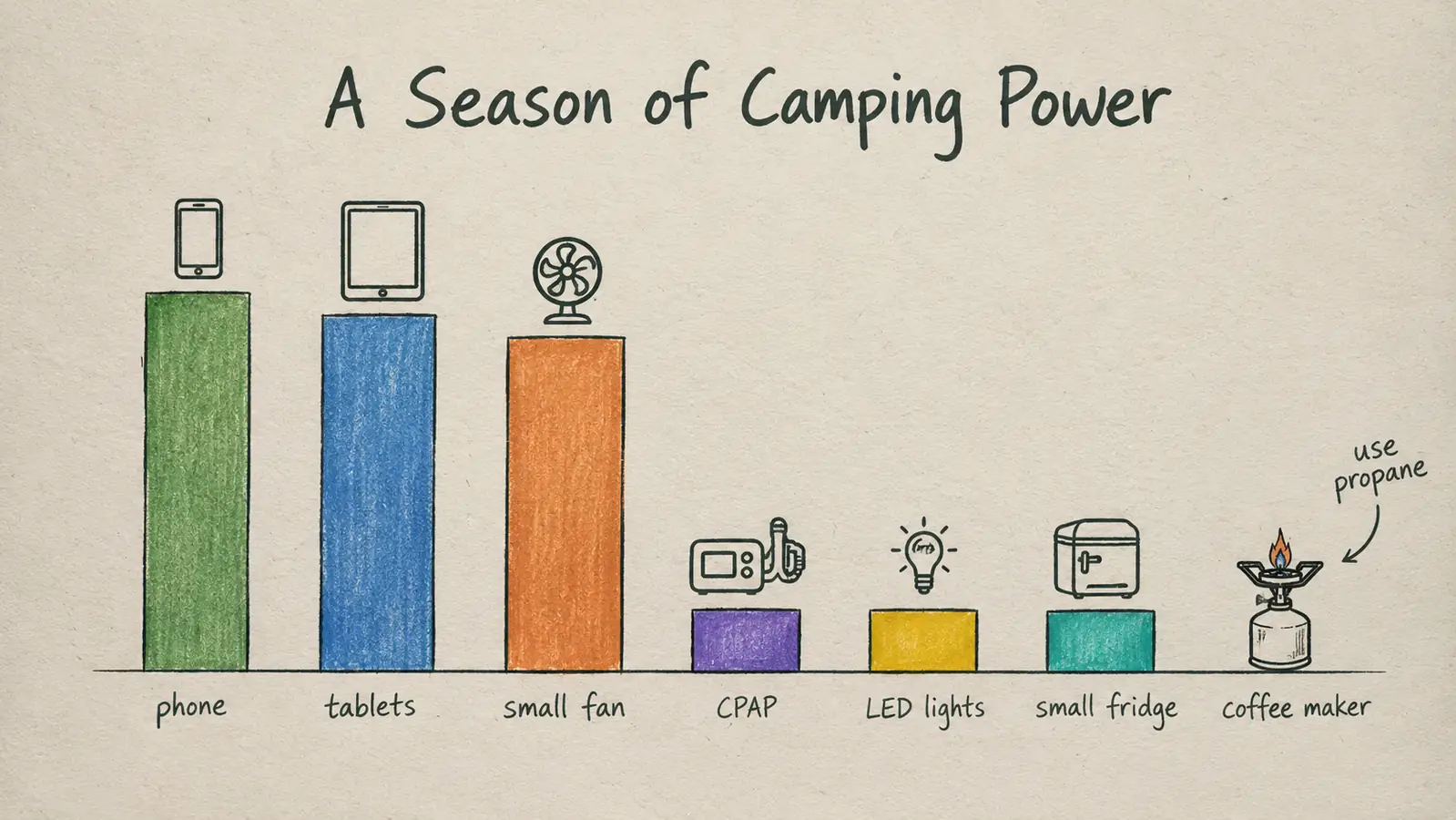
Let me save you the spreadsheet. On a 292Wh station with 300 watts of output, here is what I have run without any drama: two phones charged overnight, a tablet, a 12V fan for the dogs, LED string lights, a CPAP through the night, a camera battery charger, a small soldering iron for quick jobs, and a tire inflator in an emergency. Add a USB-C laptop for a few hours of writing at the picnic table and you are still in comfortable territory.
Here is what it does not run, and I want to be plain about this because the marketing photos would have you believe otherwise. It does not run a fridge. I know, because I tried on a hot June weekend two years ago. I plugged in a small 12V fridge, the compressor kicked in, and the unit shut off within a minute. A 12V fridge pulls more watts than the Explorer 300 can put out when the compressor starts. It does not run a coffee maker either. I tried that on the same trip, and the display dropped to zero before the water got warm. It does not run a hair dryer, a space heater, or an electric skillet. The 300 watt ceiling is real, and you will feel it the first time you plug in something with a heating element.
That is not a flaw. It is a definition. The Explorer 300 is built to keep your small electronics alive, not to run a kitchen. I cook on a propane stove and keep my food in a cooler with ice, and I have never once wished the Jackery were bigger. I have wished I had a second one, sure. But that is a different sentence.
The runtime number on the box says five hours, but that depends entirely on what you plug in. Two phones and a fan will go for days. A CPAP at pressure will go for a night and then some. The honest way to think about it is per device: a phone for a week, a tablet for three nights, a fan for a long afternoon, a CPAP for one solid night with a little left over. I keep a small notebook in the glove box with the real numbers from my own gear, and they have been consistent for years.
I have had mine for six seasons and it still holds a charge like it did in year one. I cannot say that about the first power station I owned.
Charging the Explorer 300 at Camp
The Explorer 300 charges from the wall in about 4 hours, which is what I do at home before a trip. At camp I top it up with a folding solar panel. The panel plugs straight into the input port on the front of the unit, and on a clear day it adds enough to keep the phones and the fan going indefinitely. On cloudy Vermont days it adds a little, which is still better than nothing.
The solar panel connector is a standard barrel plug, not a proprietary port, which means you are not locked into one brand of panel. That matters to me, because I started with a small panel and upgraded over time. The unit does not have a built-in display that shows watts coming in, so I check the battery percentage on the display and adjust the panel angle a couple of times a day. It is not high-tech, but it works, and it has worked for six seasons.
One thing I learned the hard way: do not leave the unit at zero for months in the winter. I keep mine in the house with a charge above 50% and it has come back every spring without complaint. That is routine care, not a special requirement, but it is the difference between a unit that lasts and one that does not. I learned that lesson with a cheaper station that spent one winter in the trailer and never woke up.
What I Liked
- Weighs only 7.1 pounds, so it actually goes with you to the picnic table
- LiFePO4 battery rated for over 4,000 charge cycles, and mine still holds a charge after six seasons
- Two AC outlets, two USB-A, a 100W USB-C PD port, and a 120W car port cover everything a camper carries
- Wall charge time of about 4 hours makes it easy to top up before a trip
- Simple and reliable: no app, no pairing, no settings to fight
Where It Falls Short
- 300W output ceiling means no fridge, coffee maker, or heating elements
- 292Wh capacity is a weekend tool, not a week-long off-grid power source
- No wattage readout for solar input, so you adjust the panel by watching the battery percentage
- Plastic enclosure feels lighter-duty than the bigger steel units
The Tradeoffs Nobody Puts in the Spec Sheet
The biggest tradeoff is not the wattage. It is the habit. Once you have a power station you can carry with one hand, you start wanting power everywhere. I have caught myself reaching for the Jackery to charge a drill battery at home. That is not a problem with the unit. That is a problem with my expectations, and it means the Explorer 300 is doing its job.
The second tradeoff is the enclosure. It is plastic, and it has held up fine through six seasons of being tossed in the truck bed, but it is not the tank that the bigger steel units are. I treat it like a tool, not a decoration, and it has never let me down. If you need something you can drop off a tailgate onto gravel, you might want the heavier unit. If you need something you can carry a mile into a kayak, this is the one.
The third tradeoff is the one that surprises people. The Explorer 300 is so easy to use that it hides its limits. You plug in a phone, it works. You plug in a fan, it works. You plug in a fridge and it shuts off, and then you have to read the manual to understand why. I read the manual so you do not have to. The ceiling is 300 watts, and everything above that is a different tool.
Who This Is For
The Jackery Explorer 300 is for the camper who wants their phone, tablet, camera, fan, and lights to just work, without hauling a generator or running the truck. It is for the tent camper who wants a CPAP at night and the RV owner who wants a second string when the house battery is low. It is for the kayaker, the tailgater, the person who works from a picnic table, and the person who is tired of counting phone charges.
It is also for the person who is new to solar and does not want to learn a dozen menus to get power. There is no app to pair, no remote to lose, no settings to fight. You plug things in and they run. That simplicity is a feature, and after six seasons I value it more than any extra watt I could have bought.
Who Should Skip It
If your camping involves a fridge, a coffee maker, a hair dryer, or anything with a heating element, skip the Explorer 300 and get a bigger station. The 300 watt ceiling is not negotiable, and you will be frustrated the first time you try to run a kettle. If you need a week of off-grid power for a family of four, this is not your unit. It is a weekend and essentials tool, and it is excellent at that job.
Skip it too if you want a single device to power your whole trailer. The Explorer 300 is a portable power station, not a house battery. It does not replace the bank under your bed. It supplements it. If you go into it with that expectation, you will love it. If you go into it expecting a whole campsite, you will be disappointed, and I would rather you hear that from me than from a cold coffee maker on the first morning of your trip.
Six Seasons In, I Still Pack It First
The Jackery Explorer 300 is the power station that taught me what I actually need off-grid. If your list looks like mine, it will do the same for you.
Amazon Check Today's Price on Amazon →