
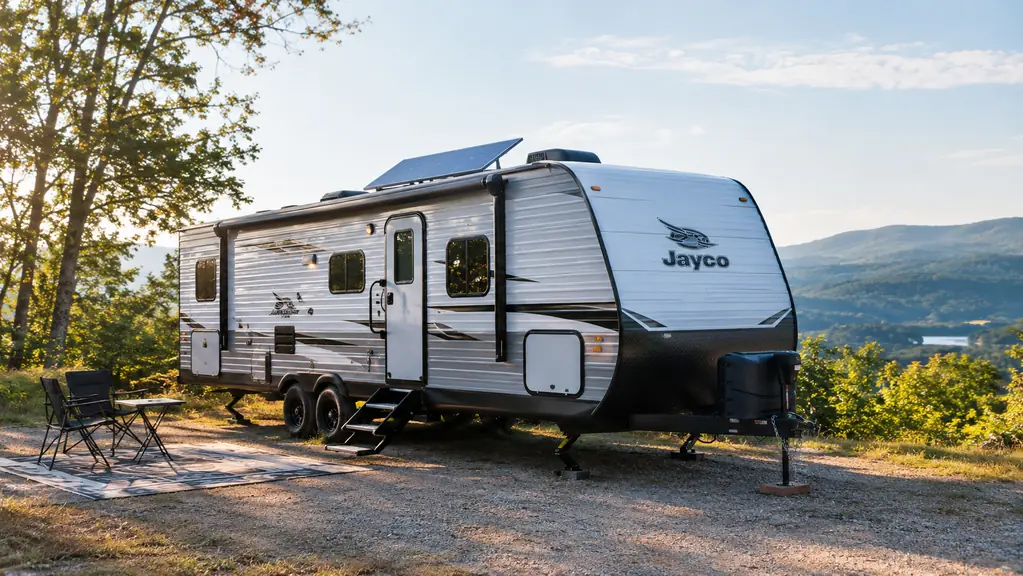
Six years ago, I woke up to a dead house battery on a cold October morning in a Vermont state park. The furnace fan had cycled all night, the little 12V fan I run for the dogs kept spinning, and by 2 a.m. the battery was flat. I remember sitting on the edge of the bunk with a flashlight, trying to remember whether I had seen the solar controller blinking the night before. I had not. I learned the hard way that guessing at battery size is how you end up eating cold cereal and hoping the truck will start. These days I size every battery bank the same way, and the LiTime 12V 100Ah LiFePO4 battery is the one I keep coming back to for campers.
This guide walks through the five steps I use when someone asks me to help them figure out their own setup. It is not complicated, but it does require a little arithmetic. Grab a notepad, write down what you actually run, and we will work through it together. I promise the math is easier than the wiring, and the wiring is easier than a cold morning with no power.
Need the short version? The LiTime 12V 100Ah is the battery I trust in my own trailer.
It is light enough to move around, rated for a long service life, and backed by a five year warranty. Check today's price on Amazon and see if it fits your build.
Amazon Check Today's Price on Amazon →How to Size a Battery Bank in Five Steps
I have helped more campers than I can count talk through their power needs, and the same mistakes come up every time. People either buy the biggest battery they can fit, or they buy the cheapest one they can find, and neither approach ends well. The right size is the one that matches what you actually run, with a little margin for weather.
Step 1: Add Up What You Actually Run
Start with the things you cannot live without. For me that is the refrigerator, the furnace blower, the water pump, the lights, and the small 12V fan I run for the dogs on warm afternoons. I also plug in a laptop and charge phones, but I treat those as extras. If the fan dies on a hot afternoon, the dogs are miserable, so it goes on the list. If the fridge stays cold, dinner is easy. That is the difference between a list that works and a list that looks good on paper.
Write down each item and its wattage. The wattage is usually printed on a sticker or in the manual. A small fridge might draw 40 watts while running, a furnace blower around 30 watts, and a water pump 50 watts when it cycles. The exact numbers matter less than getting the list right, because the list is what your battery bank has to feed. I keep a running list on my phone and add to it every time I bring something new into the trailer.
Then estimate how many hours a day each thing actually runs. A fridge does not run constantly, it cycles. In warm weather mine runs maybe six hours a day. The fan runs all afternoon. The water pump runs in short bursts, maybe half an hour total. Multiply watts by hours to get watt-hours per day, and add it all up. Do not guess high just to be safe, because an oversized bank costs money and weight you do not need. Do not guess low either, because a dead battery ruins a trip.
Step 2: Convert Watts to Amp-Hours
Batteries are rated in amp-hours, so you need to turn your daily watt-hour total into amp-hours. The math is simple: divide watt-hours by the system voltage. In a 12V trailer, that means dividing by 12. If your daily total is 600 watt-hours, you need 50 amp-hours at 12V to cover one day. If your total is 800 watt-hours, you need about 67 amp-hours. Write the number down and keep it handy.
That number is your starting point, not your final answer. A 100Ah battery like the LiTime 12V 100Ah gives you 100 amp-hours on paper, but you should not plan to drain it to zero every night. With a lithium battery you can use more of the capacity than you can with lead-acid, but I still like to keep a cushion. A battery that is regularly drained to the edge will not last as long, and the whole point of a good bank is that you do not think about it.
For a camper, I usually size the bank to cover at least one full day of normal use, then add a reserve. If your daily number is 50 amp-hours, a single 100Ah battery gives you a comfortable two days without charging. That is the kind of margin that keeps you from waking up to a dead battery. It also means you are not chasing the sun every afternoon, which is how camping should feel.
Step 3: Decide How Many Days of Reserve You Want
The next question is how many cloudy days you want to survive. Solar panels only make power when the sun is out, and a stretch of rain can mean a day or two with very little charging. I plan for two days of reserve because I camp in New England where the weather changes fast. One gray day is common, two in a row happen, and three means you are either parked under a tree or you planned badly.
Multiply your daily amp-hour number by the number of days you want to cover. If you need 50 amp-hours a day and want two days, you need 100 amp-hours of usable capacity. That is exactly where the LiTime 12V 100Ah lands, and it is why this size is such a common choice for trailers like mine. It gives you the reserve without turning the battery compartment into a storage problem.
If you run a lot of power, you can connect two batteries in parallel for 200 amp-hours. The math stays the same, you just add capacity. I have not needed that yet, but it is nice to know the option is there. Just make sure the batteries are the same chemistry, age, and capacity, and that your wiring is heavy enough to handle the combined current.
Step 4: Match the Battery to Your Space and Weight
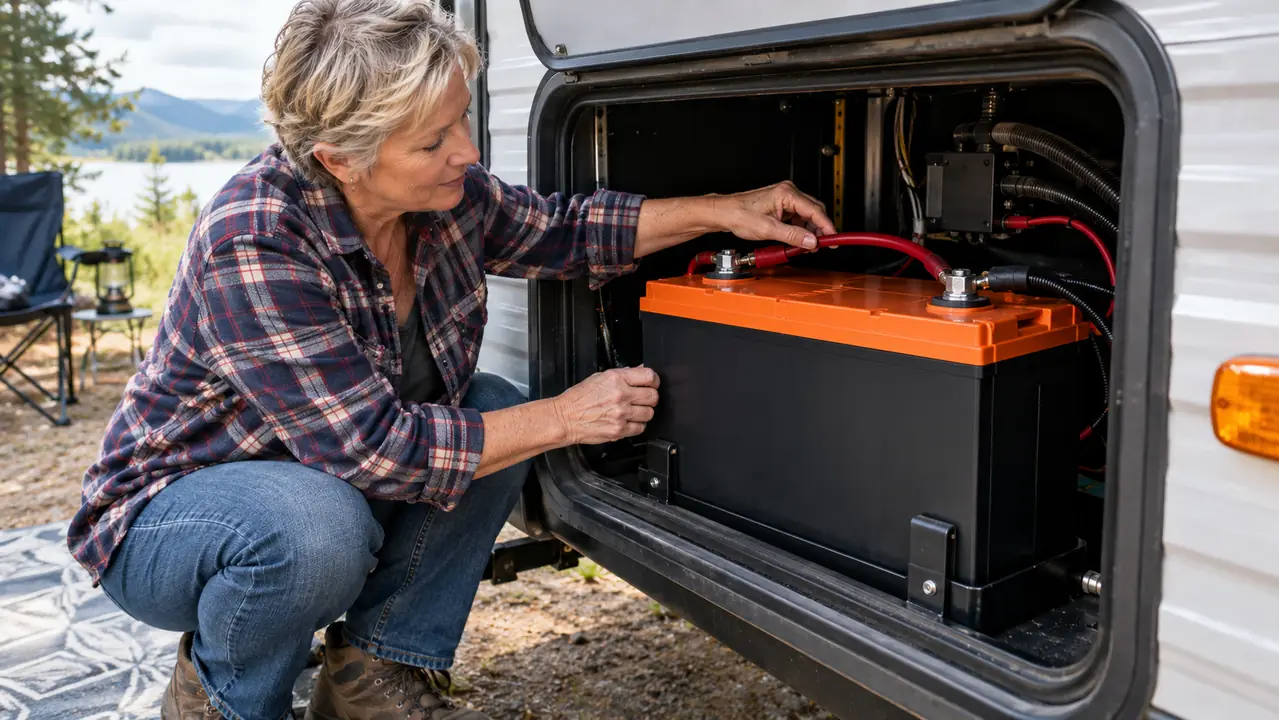
A battery bank has to fit where your trailer puts it. My 21 foot trailer has a small compartment near the tongue, and the space is tighter than you would think. The LiTime 12V 100Ah measures about 13 inches wide, 8.5 inches tall, and 6.77 inches deep, which slides into that spot with room to spare. I measured the compartment before I bought it, and I would tell anyone to do the same.
Weight matters too, especially if you are lifting the battery in and out for winter storage. This one weighs 22.1 pounds, which is roughly a third of what a comparable lead-acid battery weighs. That is a real difference when you are on your knees in a dusty compartment. I can carry it with one hand, and I am not a young person anymore. If you have a bad back or a tight space, the weight savings alone can be worth the switch.
The Group 31 case is a standard size, so it fits most battery trays and boxes made for RV use. The M8 terminals are the same style you find on many deep cycle batteries, so your existing cables likely work. Just check the terminal size before you buy cables. I have a small box of adapters and ring terminals that I have collected over the years, and the right one always shows up when I need it.
Step 5: Pick the Right Battery and Wire It Like It Matters
Once you know the capacity you need, choose a battery that is built to handle the job. The LiTime 12V 100Ah is a LiFePO4 battery, which means lithium iron phosphate chemistry. It has a built-in 100A BMS that protects against overcharge, over-discharge, and shorts. That BMS is not a replacement for good wiring, but it is a solid backstop, and it is one of the reasons I trust this battery in a trailer that sits for weeks between trips.
That BMS is the safety net. It is the reason I do not worry about leaving the battery connected while the trailer sits between trips. It also handles the normal wear of charging and discharging, which is part of why the battery is rated for more than 15,000 cycles and a 10 year plus service life. Compare that with the lead-acid batteries I used to replace every few years, and the math starts to look very different.
Wiring is where mistakes show up. Use cable that is thick enough for the current, keep the connections clean and tight on the M8 terminals, and add a fuse or breaker in the positive line. If you are not sure about any of it, find a friend who does electrical work or ask the battery maker's support line. LiTime offers 24 hour tech support, which is worth more than you might think at 9 p.m. in a campground. I have called support lines before, and the ones that answer quickly are the ones I remember.
Why Lithium Makes the Math Easier
The switch from lead-acid to lithium changes the sizing math in your favor. A lead-acid battery should only be drained to about half its rating if you want it to last, so a 100Ah lead-acid battery really gives you 50 usable amp-hours. A lithium battery like the LiTime 12V 100Ah can be discharged much deeper, which means more of the rated capacity is actually usable.
That is why a single 100Ah lithium battery can replace a pair of lead-acid batteries in many trailers. You get the same usable capacity in a lighter, smaller package. The LiTime weighs 22.1 pounds and fits in a Group 31 case, and it is rated for more than 15,000 cycles. For someone who camps a few months a year, that is effectively a lifetime battery.
At 22.1 pounds, this battery is about a third of the weight of the lead-acid battery it replaced, and it still gives me two full days of power.

What Else Helps
A properly sized battery bank is only part of the setup. I also keep a simple voltmeter in the trailer so I know what is happening before I go to bed. I check voltage in the morning and again at night, and if the solar panels have had a cloudy couple of days, I look for a chance to plug into shore power for a few hours. That habit has saved me more than once.
The other thing that helps is remembering that batteries like to be kept in a reasonable temperature range. I do not leave mine in a compartment that bakes in the sun, and I bring it inside for the winter. The lithium chemistry handles cold better than lead-acid in many ways, but I still treat it with respect. A little common sense goes a long way.
Your solar panel needs to be big enough to put the power back in. A 100Ah battery is only useful if your panels can recharge it on a normal day. I run a modest panel setup, and it keeps up with my needs because my battery bank is sized to match. If your panels are small, size the battery to what they can realistically refill, or plan to top up with shore power now and then.
Ready to size your own bank?
Start with the list of what you run, do the math, and let the LiTime 12V 100Ah do the heavy lifting. It is the battery I use in my own trailer. Check today's price on Amazon.
Amazon Check Today's Price on Amazon →