

The night it finally died, the temperature had dropped to about 38 degrees and my 2016 travel trailer was sitting in a state park in Vermont with no shore power. I had run the furnace fan, the little 12V fan I keep for the dogs on warm afternoons, and the fridge for two days. Somewhere around 2 AM, the lights went from dim to gone. The lead-acid battery that came with the trailer had been fading for a while, and that cold night was the last straw. A week earlier I had tried to revive it with a slow charge, and it had held just long enough to convince me we were fine. I sat in the dark with a flashlight, doing the math on how many more times I could replace a heavy battery that kept letting me down.
I am not an electrician. I am a retired school bus mechanic who has camped for about six years, and I learned solar the hard way: blown fuses, a dead house battery, and a lot of reading at the kitchen table. So when I started looking at the LiTime 12V 100Ah Group 31 LiFePO4 Deep Cycle Battery, I did not want a lecture on chemistry. I started with a single small panel and a portable power station, and I have added gear one piece at a time ever since. I wanted to know if it would run what I actually run, and whether it would still be working next spring.
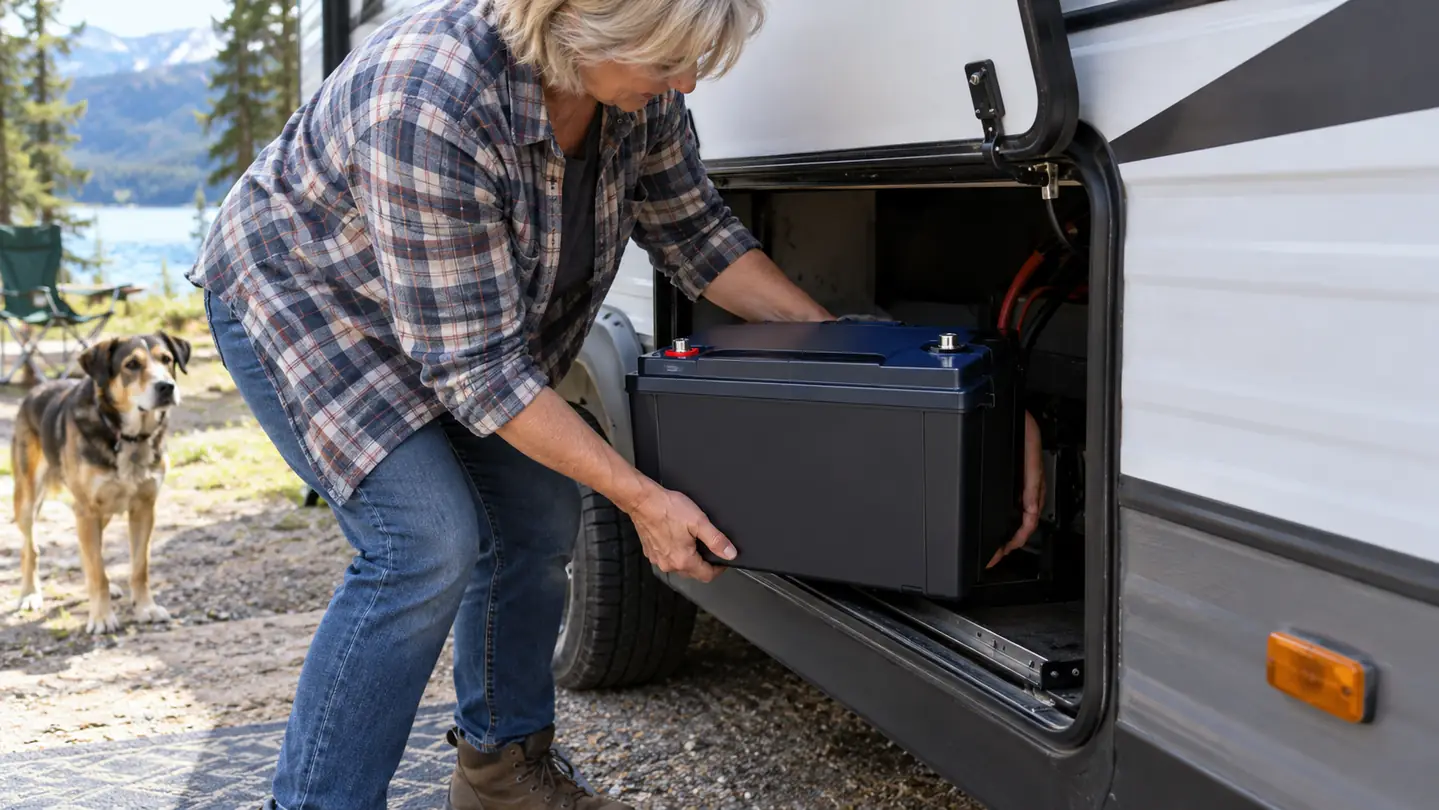
The short version is that it made it into the trailer for good. The longer version is the story of a cold night, a 22.1-pound battery, and the last time I had to apologize to the dogs for a dead power system.
Here is what happened after I switched.
The old lead-acid battery weighed more than twice as much and still gave out on a 38-degree night. The LiTime weighs 22.1 pounds and ran the same trailer for a full weekend without breaking a sweat.
The battery that finally ended my dead-power nights
If you are tired of nursing an old lead-acid battery through cold nights and short weekends, the LiTime 12V 100Ah LiFePO4 is the upgrade I wish I had made two seasons sooner.
Amazon Check Today's Price on Amazon →The first thing I noticed was the weight. The old battery took both arms and a grunt to move. The LiTime is a Group 31 size, so it fit the same tray, but at 22.1 pounds I could carry it with one hand. Last fall, when I pulled it out to store it for the winter, I carried it across the yard in one hand and did not have to brace myself against the truck. That matters more than you think when you pull the battery out at the end of the season or move it to charge it at home.
The second thing I noticed was the built-in 100A BMS. I had read about battery management systems but never actually lived with one. On the old battery, I was the management system. I watched the voltage, worried about draining it too low, and still killed it anyway. The LiTime's BMS handles overcharge, over-discharge, and short-circuit protection on its own. I do not have to think about it, and that is exactly what I wanted.
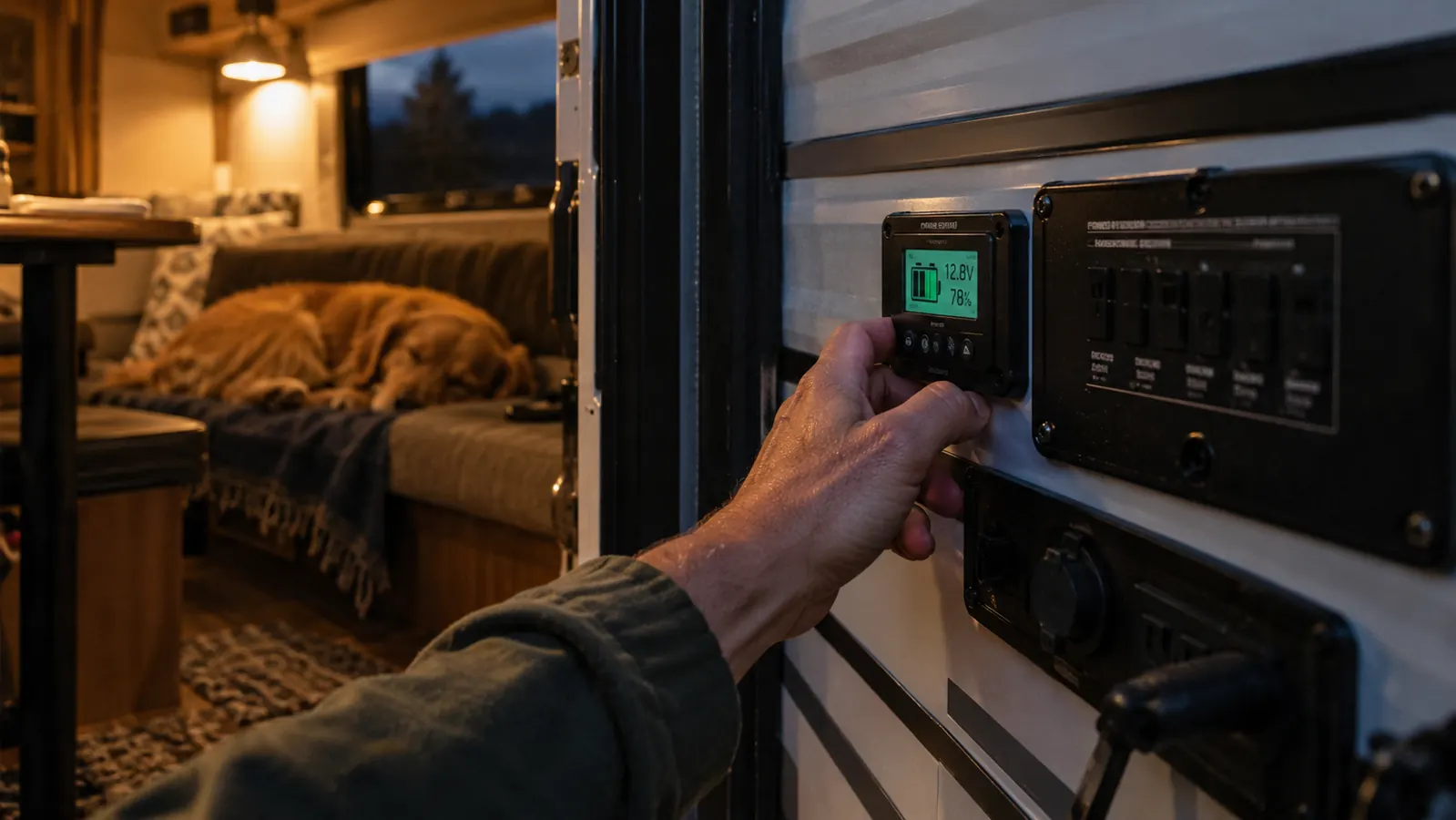
The third thing was the weekend test. I ran the same setup I always run: the fridge, the furnace fan on cool nights, the 12V fan for the dogs on warm afternoons, and a few LED lights. That first real test was the second weekend of September, at a boondocking spot off a gravel road in the Northeast Kingdom, and I even ran a small low-wattage appliance for one dinner, something I never would have risked on the old battery. Before, that same setup was a one-night plan if I was careful. With the LiTime, I went three nights boondocking and the voltage barely moved. The 100 amp hours of capacity meant I stopped planning my power use like a ration book.
I will be straight with you: it is not cheap, and I will not quote you a price because it changes. But the math I did in my head was simple. The old one had needed replacing twice in six years, and each time it died a little sooner than the time before. The manufacturer says a 10+ year life and up to 15,000+ cycles, which is roughly 10 times longer than lead-acid. Even if I only get a fraction of that, I am not buying a new battery every two or three seasons. The 5-year warranty and 24-hour tech support took away the last of my hesitation.
What I'd Tell You If We Were Sitting at My Kitchen Table
If you were sitting at my kitchen table in Vermont, I would tell you this. If your lead-acid battery is more than a few years old, you already know it is on borrowed time. You have probably done the same dance I did: checking voltage, turning things off to save power, and hoping it makes it through one more trip. You do not have to keep doing that.
I would also tell you to check your trailer's battery compartment before you buy. The LiTime is Group 31 sized, so it fit my tray without modification, but measure yours. And I would tell you that the weight alone is worth it. At 22.1 pounds, it is about a third of the weight of the lead-acid battery it replaced, and that makes setup and moving genuinely easier.
Mostly, I would tell you that the peace of mind is the real upgrade. I do not wake up at 2 AM wondering if the lights will still work. The dogs get their fan on warm afternoons. I cook dinner at camp like I meant to. The LiTime 12V 100Ah LiFePO4 battery did not change how I camp. It changed how I sleep when I camp.
Give your trailer the same quiet upgrade
The LiTime 12V 100Ah LiFePO4 Deep Cycle Battery fits most standard Group 31 trays, weighs 22.1 pounds, and comes with a 5-year warranty. It is the last house battery I plan to buy for this trailer.
Amazon Check Today's Price on Amazon →