
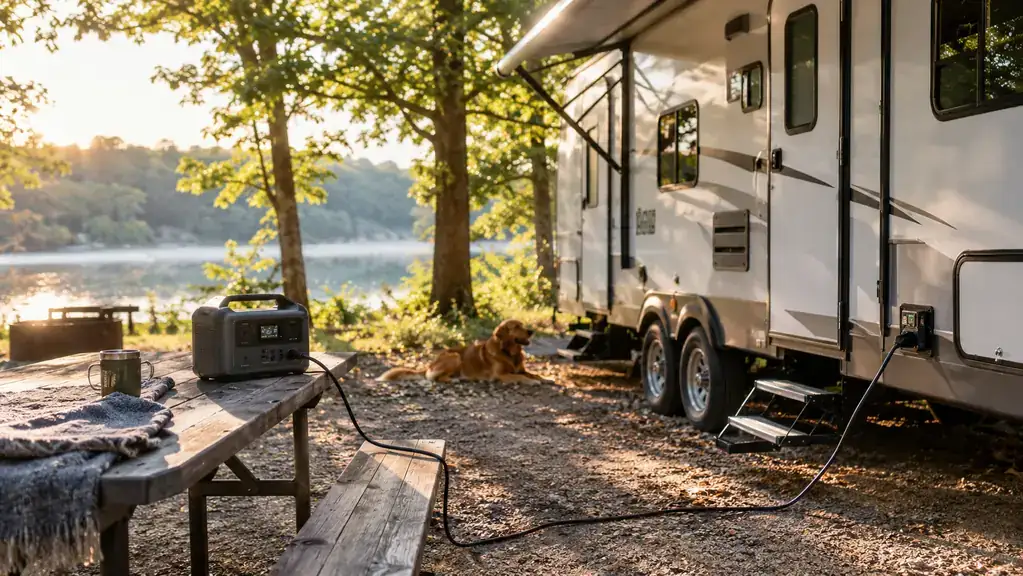
The first time I ran out of power at camp, it was my own fault. I had one small solar panel, a battery that was never big enough, and more hope than sense. That was six years ago. I still camp the same way, from late spring to mid fall in the Northeast, but the power setup has changed. The Jackery Explorer 300 is the piece that made the difference. It does not look like much, but it has carried the things I actually depend on, night after night. The dogs did not care. The fridge did.
At 292Wh and about seven and a half pounds, the Explorer 300 is not the biggest power station on the market. It does not need to be. It sits on the picnic table, runs what I actually run, and refills from a folding panel while I make breakfast. Here are ten reasons it earns its spot in the trailer. None of them are about specs on paper. They are about what happens at the campsite when the sun goes down and the nearest outlet is twenty miles away. The list is in the order I would explain it to a friend, not in order of importance.
The Power Station That Earns Its Spot in the Trailer
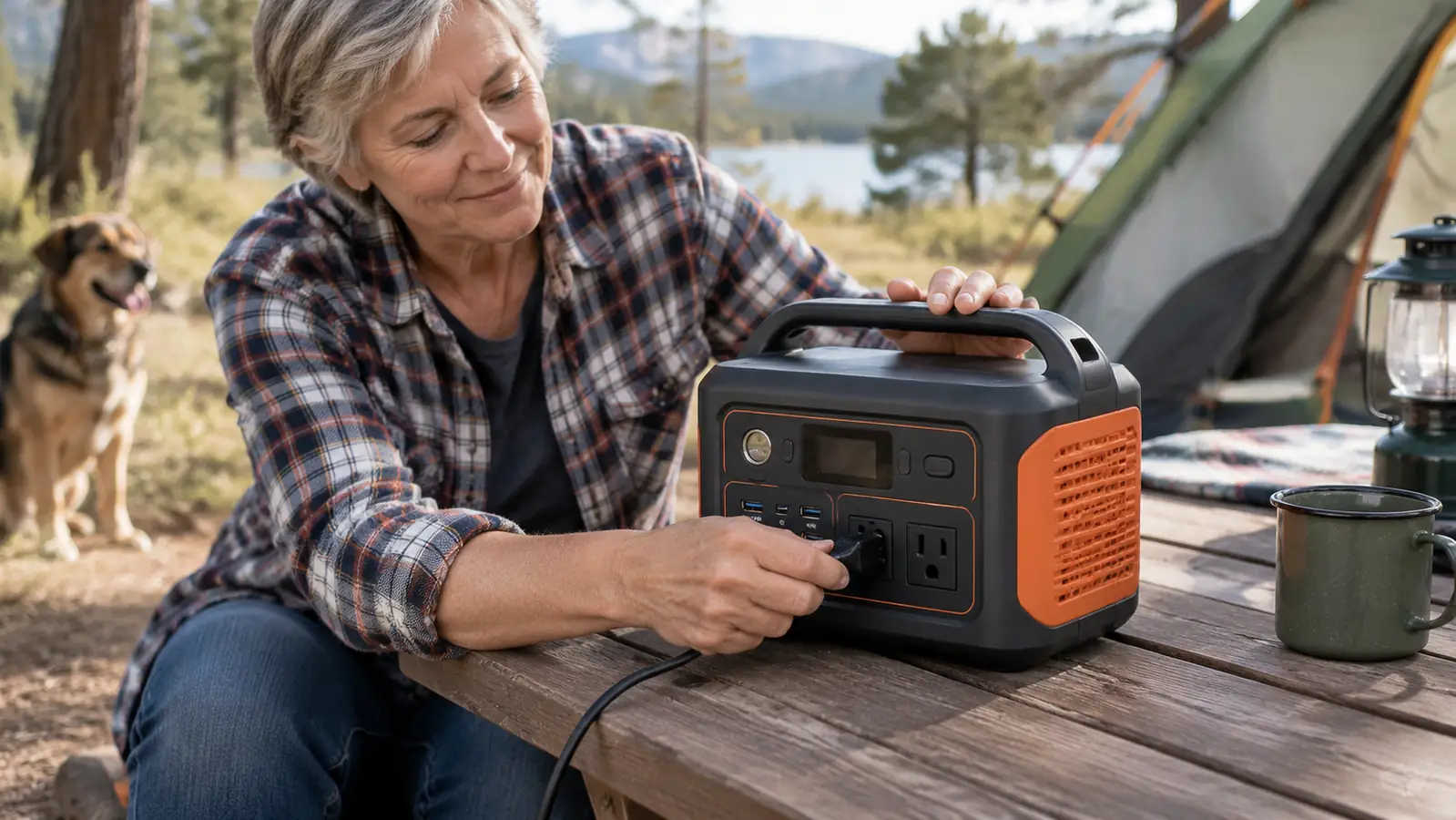
The Jackery Explorer 300 packs 292Wh into about seven and a half pounds, with two AC outlets, a 100W USB-C PD port, and a 120W car port. It is the middle piece of my whole camp setup, and the piece I reach for first when I set up camp.
Amazon Check Today's Price on Amazon →It Kept the Fridge Cold the Night the House Battery Died
Last fall I pulled into a state park after a long drive. The trailer battery gave up around midnight, and the little 12V fridge was the one thing I could not afford to lose. I plugged it into the Explorer 300's 120W car port, and it ran until morning. The fridge is not a big one, but it is the difference between cold leftovers and a cooler full of warm water. I did not have to sit in the dark or listen to a generator. The station still had enough left for coffee the next morning. That one night paid for the unit in my mind.
The Dogs Get a Fan on Warm Afternoons
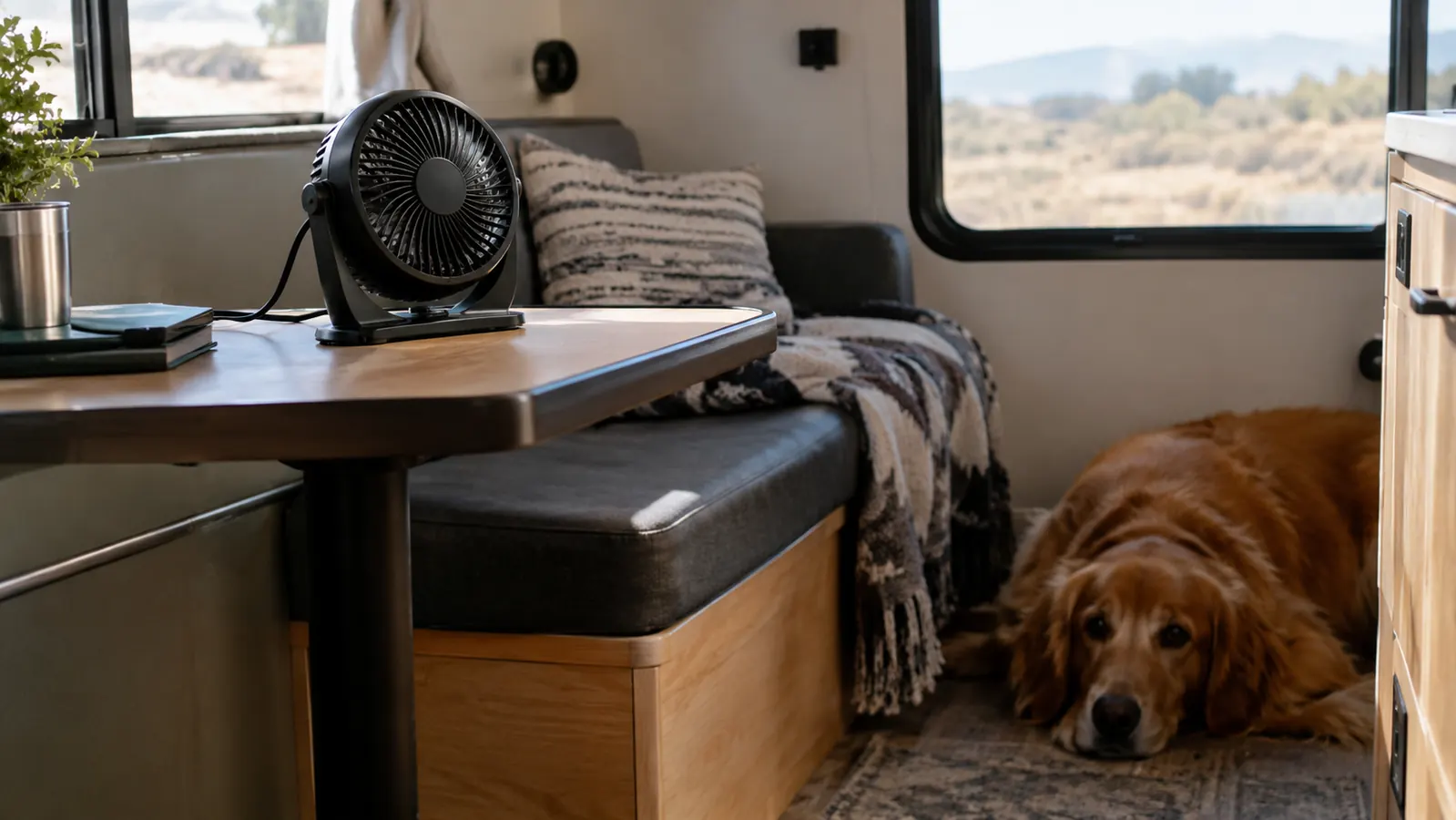
The dogs and the cat ride along on most trips, and on a warm afternoon the trailer turns into an oven. A small 12V fan through the car port keeps air moving without running the truck or a generator. It draws almost nothing, so I can leave it on for hours. It is the kind of small comfort that makes a long afternoon feel like a vacation instead of a chore. The cat finds the coolest corner and stays there, which is its own kind of review. The animals nap, I read, and nobody is miserable.
Phones, Tablets, and a Laptop All Charge at Once
The Explorer 300 has two AC outlets, a 100W USB-C PD port, two USB-A ports, and a 120W car port. That is six places to plug something in. In practice I charge my phone and the tablet on the USB-A ports, top up my laptop on the USB-C port, and still have an AC outlet free for the string lights. The USB-C port is the one I reach for first, because it handles the laptop without a second thought. I used to plan my work around campsite hookups, and now I do not.
It's Light Enough to Move From Truck to Table
At about seven and a half pounds, the Explorer 300 is easy to carry with one hand. I lift it out of the truck, set it on the picnic table, and plug in what I need. No extension cords running across the campsite, no wrestling with a heavy battery box. I have hauled heavier batteries and I have hated every one of them. I can manage this one before coffee, which is the real test. Compact is the whole point.
It Refills From a Folding Solar Panel
I started with a single small panel six years ago, and I still top the Explorer 300 up the same way. Set the panel out in the morning, and by the time lunch is done it is putting power back in. Jackery lists the charge time at about four hours, and off the panel it simply fills through the day. I keep the panel in the back of the truck and pull it out when I set up camp. On cloudy days I charge it from the wall at the next site, and four hours later it is full again.
Camp Lights Without Tripping Over Cords
One of the two AC outlets runs the string lights over the picnic table, and the other runs a small lamp inside. That is the whole evening sorted. The lamp is a small LED one that draws almost nothing, so the evening can run long without me watching the clock. It is a small thing, but small things are what make camp feel like home. I stopped running cords from the truck battery years ago, and I do not miss the tangle.
It Runs the Small Kitchen Stuff, If You Mind the Wattage
The Explorer 300 tops out at 300W, so I read labels before I plug anything in. A low-wattage percolator works. A full-size kettle does not. I keep a list of what draws what, and I check it the same way I check the weather. The percolator is an old one, and it draws just under the limit, so I let it finish before I plug in anything else. That honesty matters. This is not a generator, it is a battery with limits, and knowing the limits is what keeps it reliable.
No Engine Noise, No Gas Smell
The neighbors in the next site run a gas generator for their coffee. I run the Explorer 300. There is no engine noise, no fuel to carry, and no smell drifting across the picnic tables. It just sits there and works. I am not against generators. I just do not want to listen to one while I am trying to hear the loons. On a quiet evening, that is worth more than any wattage figure.
You Always Know What You Have Left
The math is simple. 292Wh means a 60W load runs for close to five hours, and Jackery lists the runtime at five hours. I plan the evening on a napkin: fan here, lights there, phone on the USB port. It takes the guesswork out of the evening, and guesswork is what drains batteries. The napkin math has never let me down, because I never plug in more than I planned. Nothing about it is a surprise, and surprises are what ruin camping trips.
It's Why I Stopped Worrying About Cold Nights
Six years ago I camped with one small panel and a power station that barely lasted a night. Now the Explorer 300 is the middle piece of everything I run, and it is rated for over 4,000 charge cycles. It stays in the trailer between trips, which means it is always charged and always ready. It is not the biggest or the flashiest. It is the one I trust. Cold nights went from a worry to a non-event, and that is the real reason it stays in the trailer. That is the whole review, right there.
What I'd Skip
I would not tell everyone to buy this. If you need to run a space heater, a full-size kettle, or anything over 300W, this is the wrong tool. If you camp for a week with no way to recharge, a 292Wh station will not carry you. If you already have a big lithium bank in a large RV, you probably do not need a second unit. And if you mostly camp where there is shore power, you may not need it at all, though I still bring mine because the outlet at the post is not always where I want it. The honest version is that this is a tool with a job, and the job is small, steady, off-grid power for one person's camp setup. If that is your job, it is hard to beat. If it is not, no amount of clever marketing will make it fit.
The night the house battery died, the Explorer 300 ran the little fridge until morning and still had power left for coffee.
Give Your Camping Setup a Steady Middle Piece
If you camp with small loads and a fridge that has to stay cold, the Explorer 300 is worth a look. I have had mine for two seasons and it has not let me down. See what it costs today.
Amazon See Today's Price on Amazon →