Last summer, on the hottest night of the year, I learned why the Jackery Explorer 300 stays in my trailer now. I'm Joanne Tilley, a retired school bus mechanic from central Vermont, and I've camped with solar for about six seasons. My rig is a 2016 travel trailer, 21 feet, towed by my pickup. That night we were parked in a Vermont state park with no electric hookup, and the temperature was still in the high eighties at ten o'clock. It was one of those nights when the shade didn't help and the breeze was just a rumor.
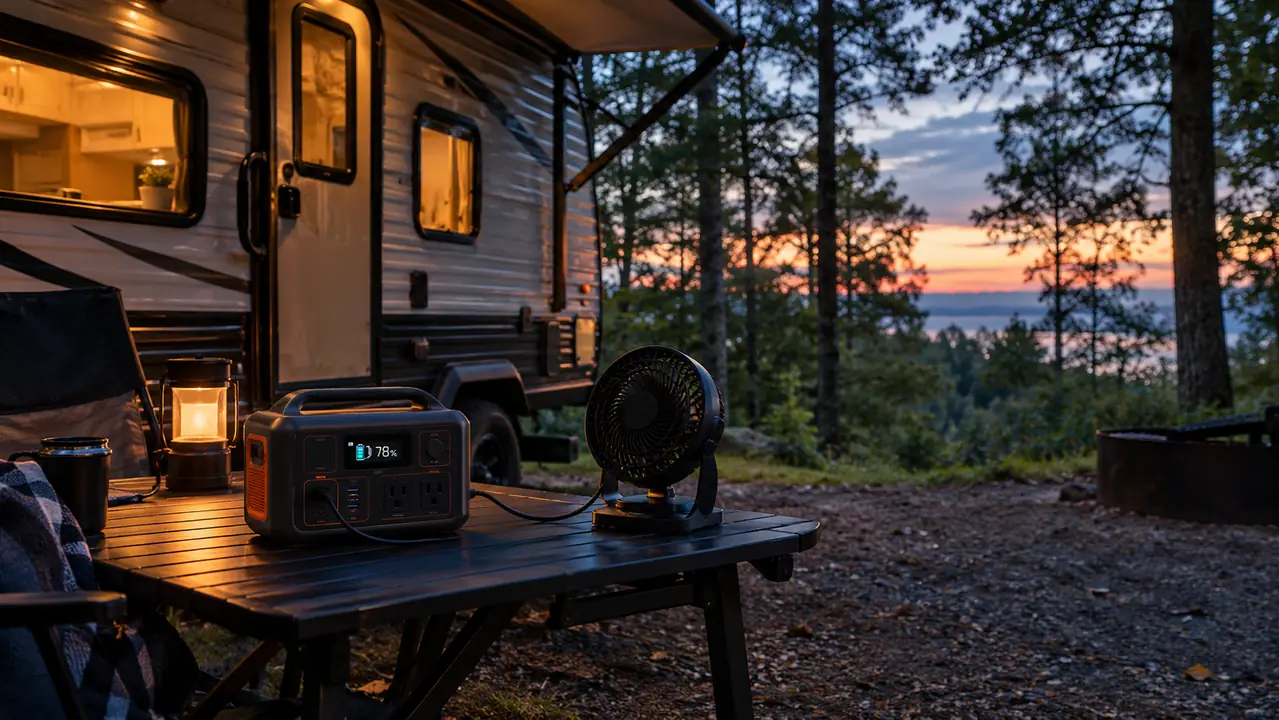
The dogs and the cat were sprawled on the floor, panting. I had a small 12V fan that I usually run for them on warm afternoons, but I didn't want to leave the trailer's house battery draining all night. In the past, I'd woken up to a dead battery more than once, and a cold night in the trailer with no way to start the heater is a lesson you only need to learn one time. The dogs were too hot to settle, and the cat had claimed the one cool corner under the table.
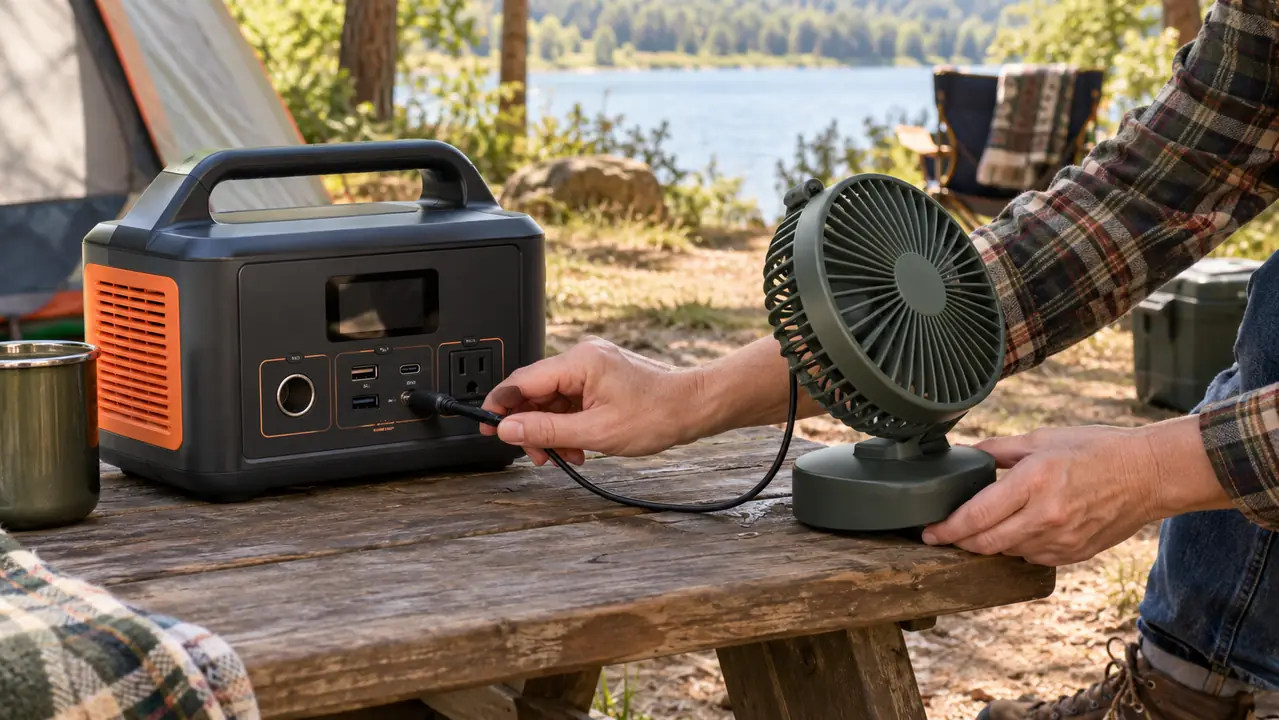
So I did what I'd been putting off: I pulled the Jackery Explorer 300 out from under the dinette seat, plugged the fan into one of its two AC outlets, and set it on the table by the window. I had bought the Jackery earlier that spring, mostly because I was tired of watching the house battery drain every time we camped without hookups. The fan hummed along like it had always lived there. I lay down, expecting to get up in an hour to check it, and instead I slept straight through.
When I woke up, the fan was still going. That's the part I want to explain, because it's easy to read a spec sheet and not feel what it means. The Explorer 300 has 292 watt-hours of capacity and a 300-watt maximum output. That's enough for a small fan, a phone, and the kind of low-wattage things you actually use at camp, not a fantasy of running an air conditioner. It's the difference between camping and just sleeping outside.
I spent the next morning doing what I always do with new gear: I pushed it a little. I charged my phone through the USB-C port, ran the fan through the hottest part of the afternoon, and plugged in a small kitchen appliance while I made lunch. The Jackery handled all of it without complaining. By evening, it still had plenty left. I liked knowing I could top it up in about four hours once we got home, so the next trip would start with a full station.
By the time we packed up to leave, I'd made up my mind. The Jackery Explorer 300 wasn't going back in the closet with the other gear I meant to learn how to use. It was going to live under the dinette seat, charged and ready, because the fan is only part of it. Knowing I have steady power for the dogs, the cat, my phone, and the small things that make camp feel like home is worth more than any spec sheet. The next weekend, I left it on the counter all week so I didn't have to think about it.
The fan ran all night, and the next morning the Jackery still had enough to charge my phone and run the fan through the hottest part of the afternoon.
The Fan Ran All Night. Now I Keep It in the Trailer.
If you camp without hookups, the Jackery Explorer 300 is the kind of gear that earns its spot. It charges in about four hours, runs the things you actually use, and fits under a dinette seat. See today's price on Amazon and read the long-term review.
Amazon Check Today's Price on Amazon →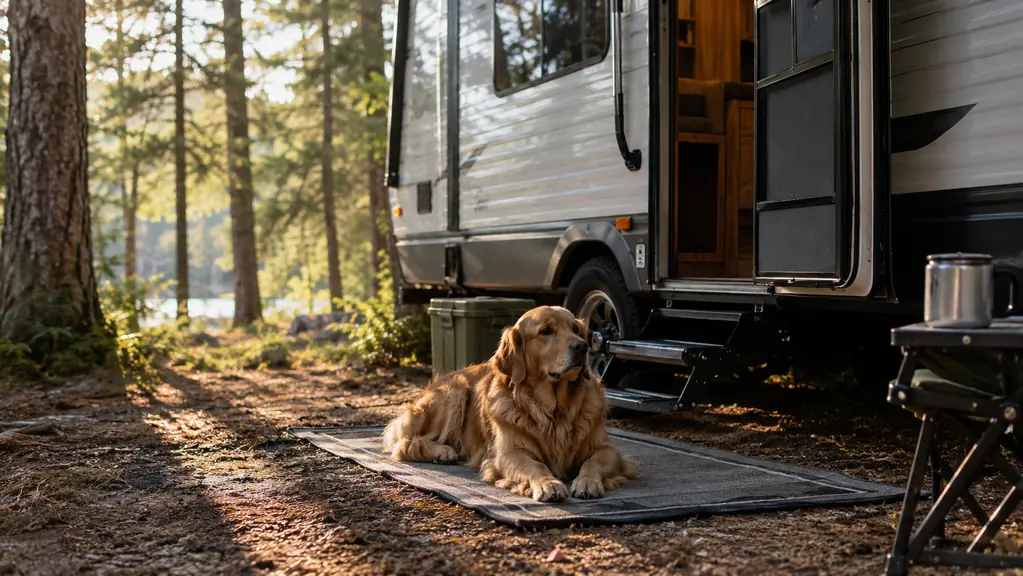
The rest of the season, the Explorer 300 came along on every trip. I didn't treat it like a fragile piece of electronics. It sat in the back of the truck on gravel roads, got hauled in and out of the trailer, and once spent a rainy afternoon on the picnic table under a tarp. It kept working. The LiFePO4 chemistry is supposed to handle thousands of charge cycles, and I believe it, because mine has been through a lot of weekends without a complaint. I also liked that it charges in about four hours, so I could top it up the morning we left and not worry about it later.
There were a few times I was glad it was there. One night a thunderstorm knocked out the park's power for a couple of hours. The trailer was fine, but the dogs were not. I plugged the fan back into the Jackery, turned on a small light, and we all sat through the storm without the dark and the heat making things worse. By morning, the park power was back, but I didn't have to wait for it.
I'll be honest about the limits too. It's not a big station. If you're trying to run a space heater or a microwave, you're going to be disappointed. I never expected that from it. For my setup, which is a modest trailer and a low-wattage way of living at camp, it hits the spot. The two AC outlets mean I'm not juggling a dozen plugs, and the USB ports handle the phone and the little things. It's the right size for the job, not the biggest size for the bragging rights.
That's the real reason this story stuck with me. It wasn't the one dramatic rescue. It was the quiet nights, the fan running steady, the phone charged, the dogs asleep, the cat on the pillow. The Jackery doesn't ask for much. It takes a few hours to top up, rides along in the truck, and sits quietly under the dinette seat until I need it. Gear that lets you stop thinking about power is the gear you keep.
What I'd Tell You If We Were Sitting at My Kitchen Table
If we were sitting at my kitchen table in Vermont, I'd tell you this: don't overthink it. Start with what you actually need to run at camp, not what the biggest battery you can afford promises. For me, that's a small fan, a phone, and a low-wattage appliance or two. The Jackery Explorer 300 covers that with room to spare. Charge it before you leave, keep it someplace you'll actually use it, and you'll stop worrying about the house battery before you know it. That's the whole thing. You don't need a bigger setup until your nights look different than mine.
Before Your Next Warm Weekend, Take a Look at the Explorer 300
It's the piece of gear I now load first, right behind the food and the dog bed. Check today's price on Amazon and see if it earns a spot in your trailer too.
Amazon Check Today's Price on Amazon →