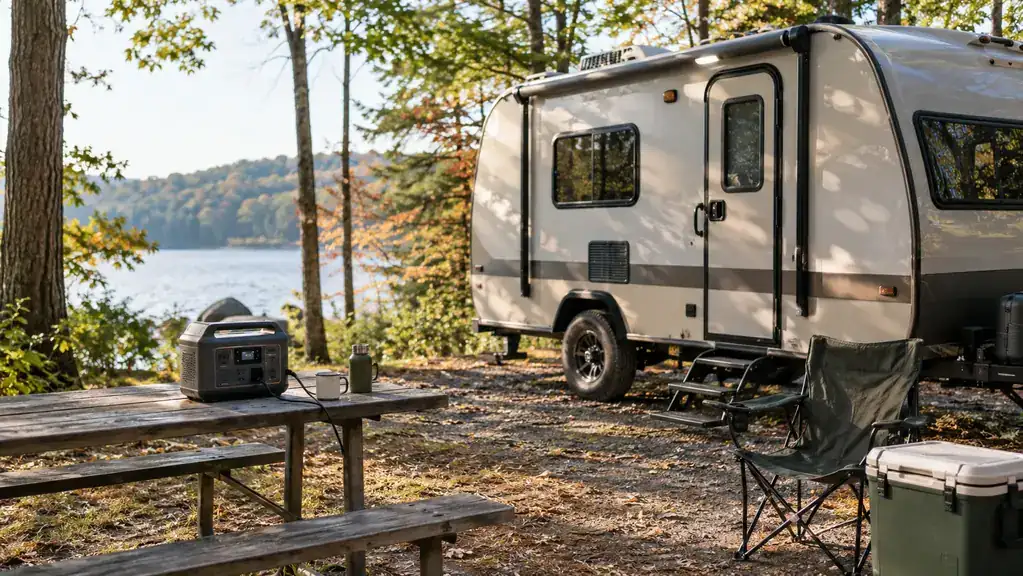
I spent three years hauling a lead-acid battery in a plastic box before I bought a power station that actually lasted, and I still remember the night the old one died. It was October, the trailer was 21 feet of cold metal, and the dogs were curled up wondering why the fan had stopped. The next morning I started reading about lithium iron phosphate and never went back. If you are standing where I was, trying to decide between the Jackery Explorer 300 and the BLUETTI Elite 30 V2, here is the short version: both will keep your gear alive, but they are built for different lengths of trip.
I run a small 12V fan for the animals on warm afternoons, a three-way fridge that draws modest power, and the usual phone and camera charging. The Jackery Explorer 300 covers all of that with room to spare at 292Wh and a 300W ceiling, and it weighs 7.1 pounds, which means I actually carry it from the truck to the picnic table instead of leaving it bolted to the trailer floor. The BLUETTI Elite 30 V2 answers a different question. If you camp for a week at a stretch and want to run bigger loads, the extra capacity and extra ports earn their weight. For most of my weekends, the Jackery is the one that comes out of the truck.
The real question is not which station is better. It is which one matches the trip you actually take. Most of us camp Friday to Sunday, run a few small loads, and want the power to be a thing we never think about. That is the Jackery's home turf. The BLUETTI is for the trips where power is the point: a week boondocking, a bigger fridge, a basecamp that has to feed more than two people.
There are really two kinds of off-grid campers. The first kind wants power to disappear into the background: charge the phone, run the fan, keep the fridge cold, done. The second kind wants power to be a tool they plan around: bigger loads, longer stays, more devices. The Jackery Explorer 300 was built for the first kind. The BLUETTI Elite 30 V2 was built for the second. Neither is wrong, but buying the wrong one means either carrying weight you do not need or running out of juice on a Sunday.
How I Tested Both
Testing was not a lab exercise. I spent a June weekend at a state park in central Vermont running my normal camp routine off each station, then a second weekend boondocking with no hookups at all. Same trailer, same fridge, same fan, same phone plugged in overnight. I wanted to know which unit got me through a Friday-to-Sunday trip without thinking about the battery meter.
The loads were the ones I actually live with: a small 12V fan for the animals on warm afternoons, a three-way fridge that sips power on propane, phones and a camera charging overnight, and the occasional low-wattage kitchen appliance for breakfast. Nothing heroic. If a station could not carry that much, it was not doing its job.
| Jackery Explorer 300 | BLUETTI Elite 30 V2 | |
|---|---|---|
| Capacity | 292Wh, rated for five hours of runtime | A larger bank that stretches into a second evening of the same loads |
| Weight | 7.1 pounds, a one-hand carry from truck to camp | Heavier, so it tends to live in the trailer once parked |
| Footprint | 9.1 x 5.2 x 7.8 inches, slips under the dinette bench | Takes up real floor or table space in a 21-foot rig |
| Output | 300W ceiling, runs the fan, the small fridge, and every charging cable at once | Higher wattage ceiling for bigger appliances |
| Ports | 2 AC outlets, 2 USB-A, 1 USB-C PD at 100W, 1 car port at 120W | More ports overall for a full campsite of devices |
| Recharge | About 4 hours from the wall | Longer from the wall, because there is more battery to fill |
| Chemistry | LiFePO4 rated for more than 4,000 charge cycles | Same long-lived lithium chemistry in this class |
| Best for | One or two people keeping phones, fan, and fridge alive on a weekend | Longer boondocking with heavier loads |
Read the table the way you would read a campfire argument: nobody wins every round. The Jackery takes the portability rounds, the BLUETTI takes the capacity rounds, and a couple of rows are honest ties. That split is the whole point of this comparison.
Here is what the table does not show. On the Friday of my boondocking weekend, I came in with the Jackery at full charge and ran the fan through a warm afternoon, the fridge through the night, and two phones to full. By Sunday morning the meter sat at about a third. The BLUETTI, on its weekend, never dropped below half. That is the whole trade in one paragraph: the Jackery makes you think about power on the third day, and the BLUETTI makes you stop thinking about it altogether.
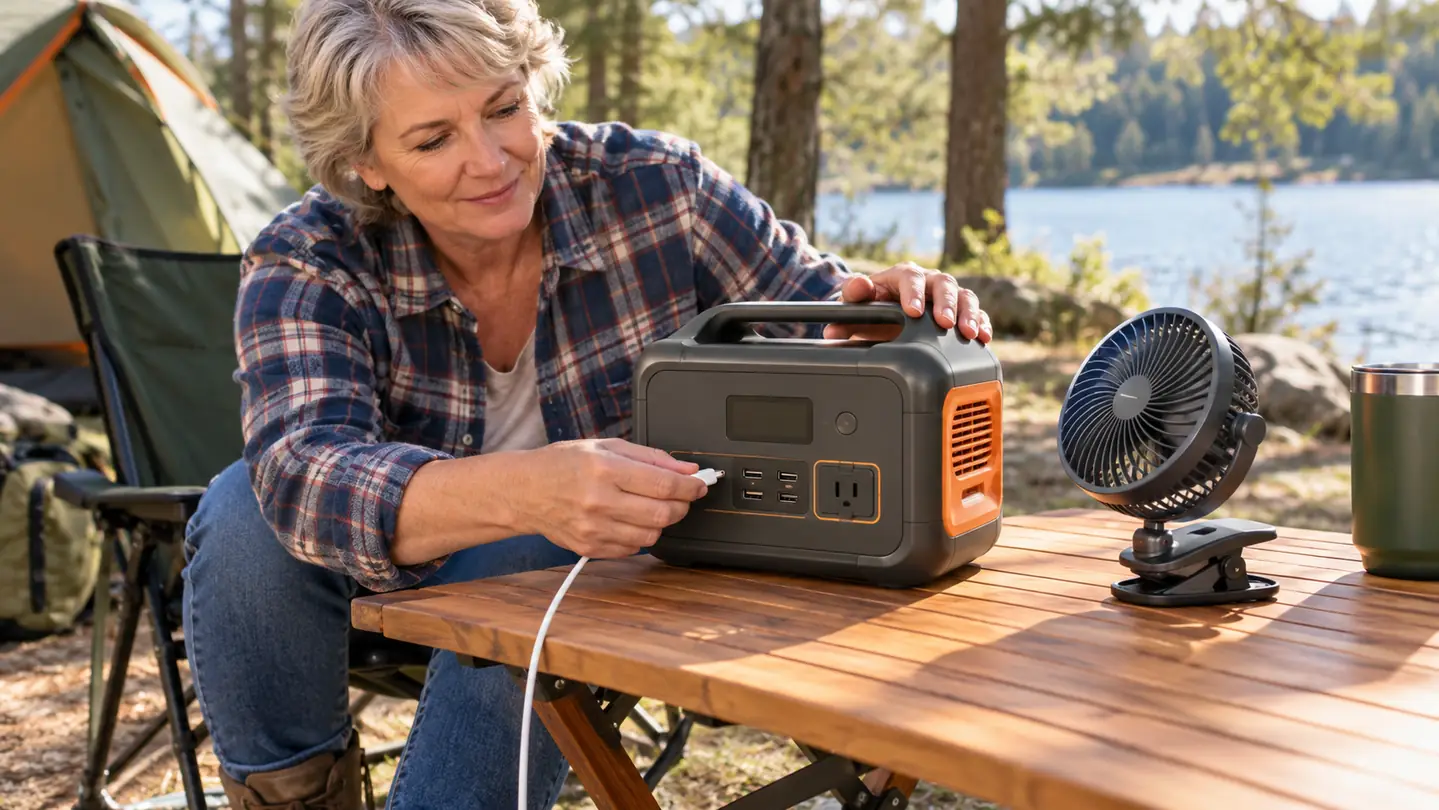
At 7.1 pounds with 292Wh on tap, the Jackery is the station I lift one-handed and trust with the fridge.
Where Jackery Wins
Weight and size are the whole story here, and they are the reason the Jackery Explorer 300 is the station I reach for first. At 7.1 pounds it is a one-hand carry from the truck bed to the camp table, and at 9.1 by 5.2 by 7.8 inches it tucks under the dinette bench without stealing foot room in a 21-foot trailer. When you camp in state parks where the walk from the parking pad to the site is longer than you remembered, that matters on every single trip.
It also recharges fast for its size, about four hours from the wall, so I can top it off while I make breakfast and be ready to leave by noon. The 100W USB-C PD port charges my phone and my camera batteries faster than any wall brick I own, and the 120W car port means the truck can lend it a boost on the drive home. On top of all that, the LiFePO4 cells are rated for more than 4,000 charge cycles. I expect this station to outlast my current trailer.
People who have never hauled power to a campsite do not understand how much the weight matters. A station that lives in the truck is a station you actually use. A station that is a pain to move gets left behind, and then it is just an expensive paperweight in the trailer. The Jackery's 7.1 pounds is the difference between power on the picnic table and power in the truck bed.
Then there is the everyday stuff that never makes a spec sheet. The USB-C port is the one I actually use most, because it charges the phone and the camera from the same cable I already carry. With two AC outlets, two USB-A ports, a USB-C PD port, and a 120W car port, I can keep six devices going at once, which is more than I have ever needed at a campsite. The car port also means I can top the station up from the truck on a travel day, which has saved me more than once when I forgot to charge before leaving home.
Where BLUETTI Wins
I am not going to pretend the BLUETTI is the better buy for everyone, because it is not. But it wins the categories it is supposed to win. The battery bank is larger, so a three-day stay with the fridge running and the fan on does not end with the meter blinking at you on Sunday morning. That extra capacity is the difference between planning your power and just living your trip.
The BLUETTI also brings more ports, which sounds trivial until four people at the next site wander over with dead phones. And its higher wattage ceiling means you can run a bigger appliance without tripping the unit. The trade is that you carry that capability. The BLUETTI is heavier and takes up more room, so in my trailer it lived on the floor and stayed there. If your camping is more basecamp than weekend trip, that is a fair swap.
The honest way to put it: the BLUETTI is the station you plan around, and the Jackery is the station you forget is there. For a long stay with real loads, planning is the right move. For the way most of us actually camp, forgetting is the whole point.
For weekend campers, this is the station that earns its spot in the truck
The Jackery Explorer 300 rides from truck to picnic table without a grunt, keeps the fan and the fridge honest through the weekend, and recharges in about four hours. Check the current price on Amazon before you decide.
Amazon Check Today's Price on Amazon →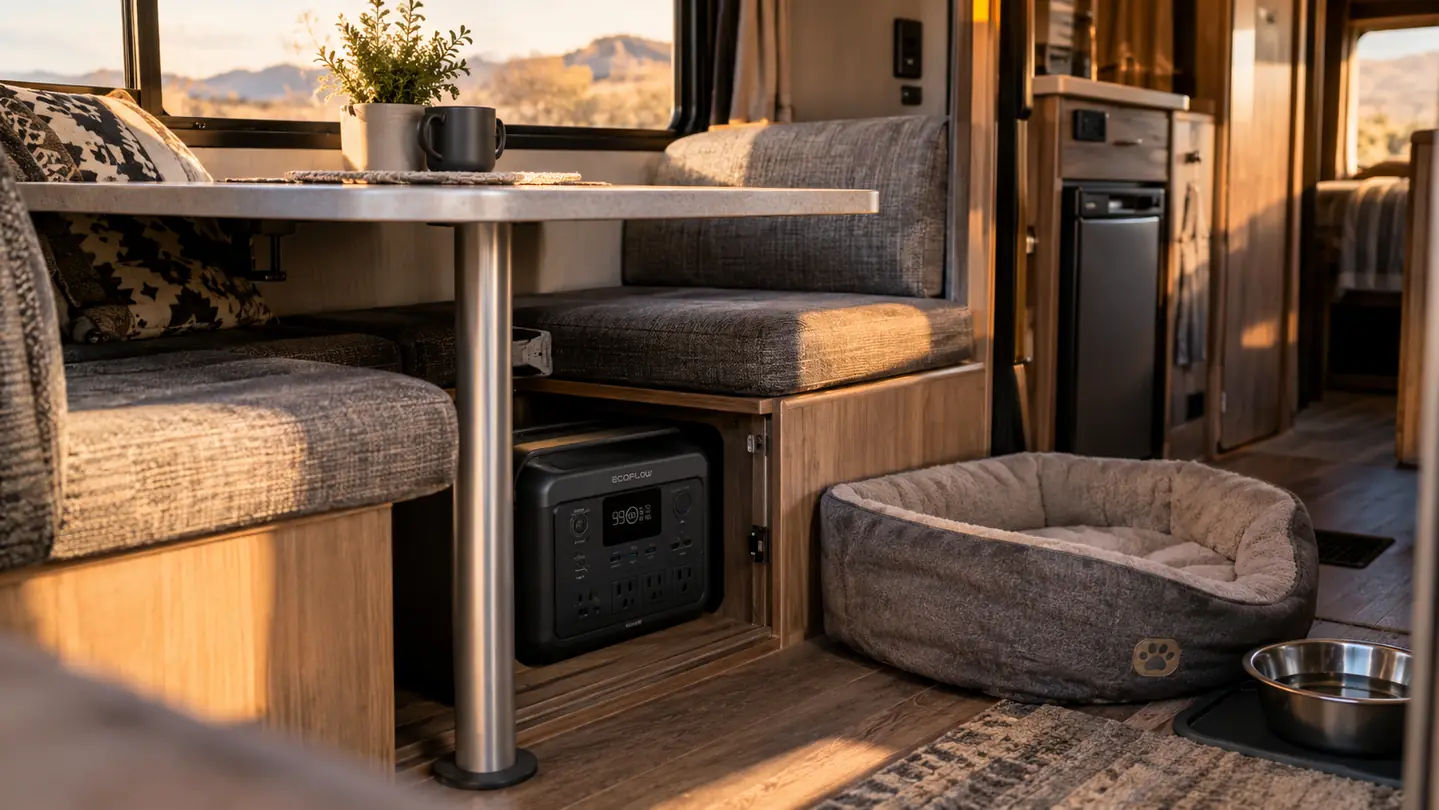
Who Should Buy Which
Buy the Jackery Explorer 300 if you camp the way I mostly do: short trips, state parks, a fridge that runs on propane with a modest 12V draw, a fan for the animals, phones and cameras to charge. It is light enough to move around, fast enough to top off between outings, and small enough to live under the bench. For a 21-foot trailer with one or two people, it is honestly all you need.
Buy the BLUETTI Elite 30 V2 if you stay out for a week or more at a time, if you want to run bigger appliances, or if you are powering more than your own campsite. If you are reading this after a long season of guessing whether you have enough power left, the extra capacity is worth the extra weight.
My own answer is the Jackery, but I say that as someone who has never needed to run a coffee maker and a heater at the same time. Match the station to the longest trip you actually take, not the one you daydream about. And be honest with yourself about which one that is.
If you are still torn, use this test. Count the longest trip you have actually taken in the last two years, not the one you hope to take. If the answer is three nights or fewer, the Jackery Explorer 300 is the right call. If it is a week or more, the BLUETTI Elite 30 V2 earns its place. My own count came out to three nights, and that is why the Jackery rides in my truck.
What I Don't Expect From a Station This Size
Let me save you a mistake I almost made myself. A 300W ceiling means the Jackery Explorer 300 will never run a rooftop air conditioner, a space heater, or anything else with a heating element bigger than a kettle. That is not a flaw. It is the deal you are making when you buy a station that weighs 7.1 pounds.
The BLUETTI gives you more headroom, and if your dream trip includes running a small electric heater on a cold night, that headroom is exactly what you are paying for. But the same rule applies to both: know what you are going to plug in before you buy, not after. I learned that lesson the year I blew the fuse on my old battery box and spent a cold night reading the manual by headlamp.
The Bottom Line
After six years of camping with solar and two full weekends running my real routine off each of these stations, I keep coming back to the same sentence: the Jackery Explorer 300 is the station that fits how I actually camp. The BLUETTI Elite 30 V2 is a fine unit for longer stays and bigger loads, and if your trips run a week or more, you may well prefer it. But for the Friday-to-Sunday rhythm most of us live in, the Jackery is the one that earns its spot in the truck every single time.
Pack the Jackery for the short trips, save the bigger station for the long ones
For a 21-foot trailer with a small fridge and three animals that expect their fan on warm afternoons, the Jackery Explorer 300 has been the right fit all season. See what it costs today.
Amazon Check Today's Price on Amazon →