
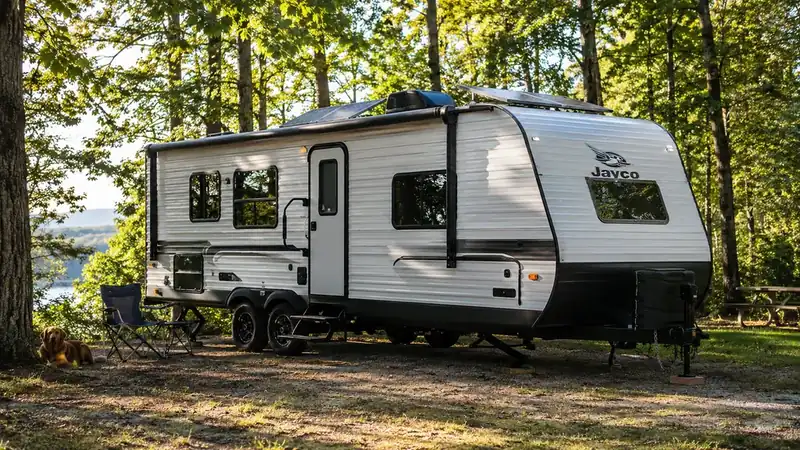
The first time I camped with a generator, I learned what every new camper learns: it works until it doesn't. The second morning the pull cord was stiff, the gas can was empty, and the dogs were giving me that look from the shade. Six years later, my 21-foot travel trailer runs on a rooftop solar kit, and the generator lives in the truck bed as a backup. The setup that finally earned that spot is the ECO-WORTHY 200 watt solar panel kit, and it changed how I plan every trip.
Here are the ten reasons I reach for solar before I even think about firing up the generator. Some are practical. Some are about quiet and sleep. One of them surprised me.
The Rooftop Kit That Ended My Generator Morning Routine
The ECO-WORTHY 200W kit mounts on the roof of a travel trailer, feeds a 30A PWM charge controller, and keeps the house battery topped off while you're out hiking. No gas, no pull cord, no noise.
Amazon Check Today's Price on Amazon →No fuel cans, no stale gas, no smell in the truck
A generator needs fuel, and fuel is the part I never missed. Gas cans slosh in the truck bed, gas goes stale between trips, and one tipped can taught me what a spilled gallon smells like for the rest of a season. The ECO-WORTHY kit runs on sunshine. I carry no fuel, I store no fuel, and I never stand at a pump filling a can for a machine I hope starts. When the sun is up, the charging is happening, whether I remember to do anything or not.
Quiet enough to hear the loons
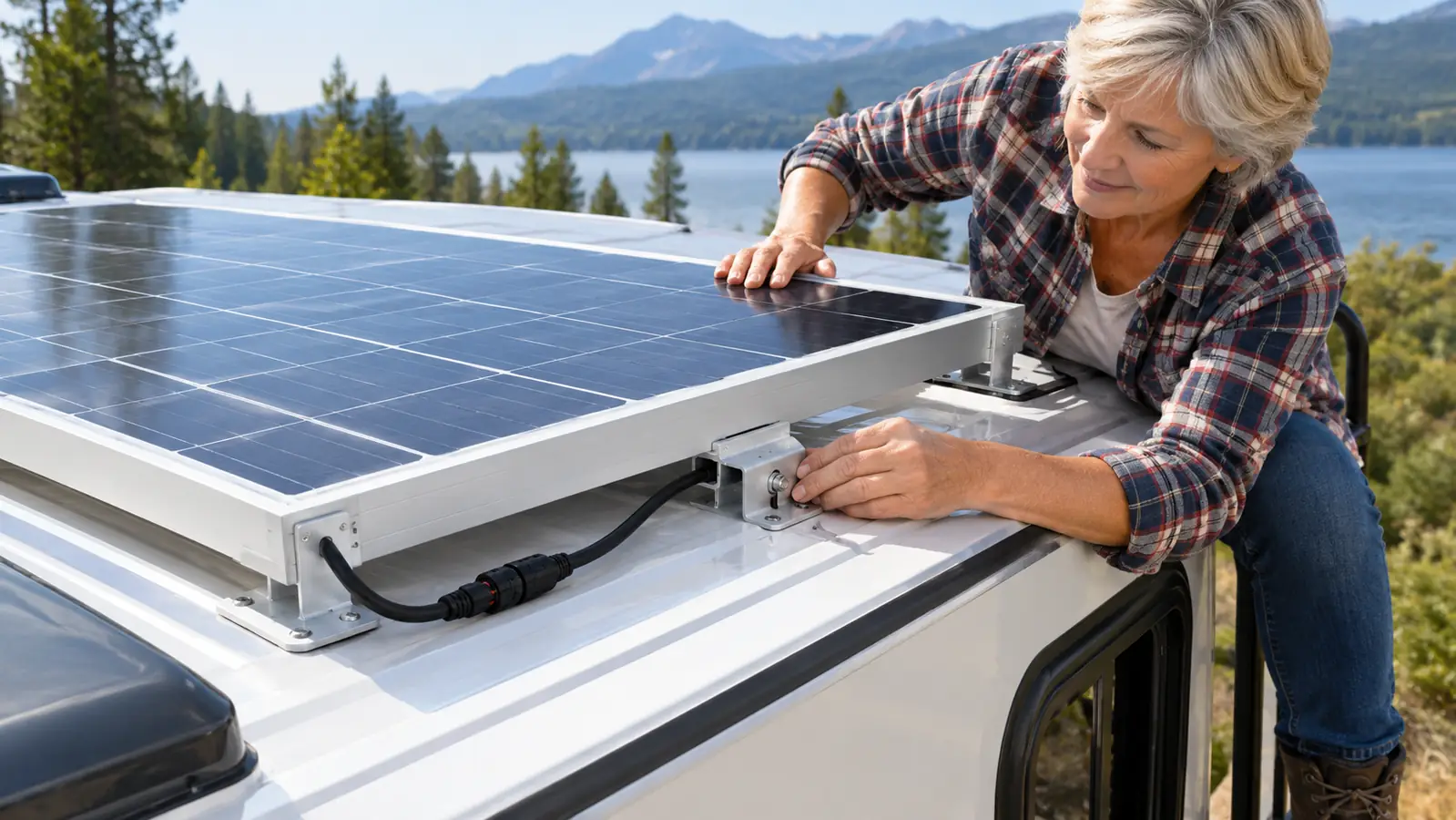
The first generator I camped next to ran from dinner until dark, and then the neighbor started his at six in the morning. I am not that neighbor anymore. This rooftop panel makes no sound at all. Mornings at camp are now coffee, the dogs, and whatever the lake is doing, and I do not have to talk over anything. The quiet surprised me more than the power did.
No oil changes, no spark plugs, no carburetor grief
Generators are small engines, and small engines demand attention. Oil changes, air filters, spark plugs, and the yearly ritual of cleaning a carburetor that sat all winter. The solar kit has no engine. The panels are solid, the controller has no moving parts, and the only maintenance I do is wiping the panel off in spring. A generator that will not start is just a heavy box of frustration.
It charges all day while you're on the trail
A generator only makes power when you are there to run it. This kit makes power all day whether you are at camp or six miles up a trail. I come back from hikes to a battery that the panels have been filling since morning. That alone changed how I spend my days at camp. I plan hikes around daylight now, not around when the generator needs to run.
Steady power for the small fridge and the dogs' fan
My setup runs a small fridge and a 12V fan I put on for the dogs on warm afternoons. The 200W kit, with its 30A PWM charge controller, keeps the house battery where it needs to be for both. I do not think about it. The fan runs, the fridge stays cold, and the dogs stay comfortable. On a 90-degree afternoon, that fan is the difference between a comfortable dog and a miserable one.
It respects state park quiet hours
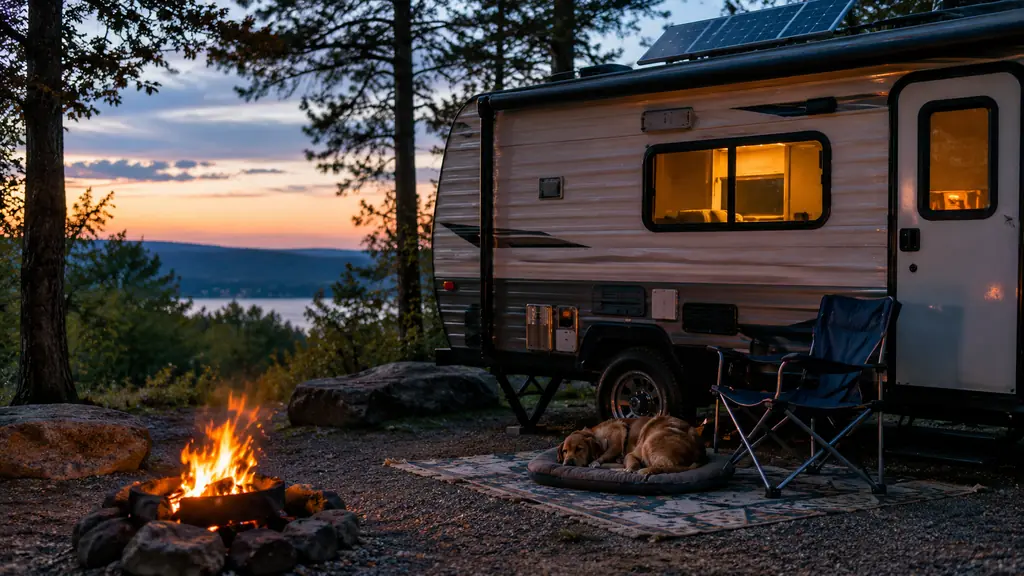
A lot of the state parks I camp in have generator hours, and some have banned them entirely. This rooftop panel never has to check the rules. I can boondock on a quiet stretch of forest service land without wondering whether the machine noise will bother the next campsite over. That freedom is worth a lot after a long week. I have camped next to generators that ran all evening, and I have been the one apologizing for my own noise. Neither is a good time.
Mount it once and nothing to set up at camp
The kit comes with two 100W monocrystalline panels, Z mounting brackets, a 30A controller, and a pair of 16.4 foot cables with MC4 connectors. I mounted the panels on the roof once, ran the cables, and that was the end of the setup. No uncoiling, no leveling, no dragging gear out of the truck at every stop. The whole install took me an afternoon with a step stool and a driver.
Nothing to break, and it shrugs off wind
The panels sit in corrosion-resistant aluminum frames, and the listing says they can handle strong wind, which matters on a roof in the Northeast. There are no belts, no valves, no pull cords, and no fuel lines to crack. The only moving part in my whole setup is the fan keeping the dogs cool. After two seasons on the roof, mine still look and sit the way they did the day I mounted them.
The controller does the babysitting so I don't have to
The 30A PWM charge controller sits between the panels and the battery and manages the charging. I used to worry about the battery like it was a hobby. Now I do not think about it much, because the controller handles the charging. It runs on 12 or 24 volt systems, which covers my trailer and most rigs I camp with. That is the part people do not tell you about solar: once it is working, it is boring, and boring is exactly what you want from power.
No more dead-house-battery mornings
The reason I started this whole solar journey was a cold night when the house battery gave up and I woke up to nothing. A 200W kit under four hours of full sun puts out about 800 watt-hours a day, which is enough to keep my battery healthy through a normal camp day. I have not had that dead, dark morning since. That cold night is what sent me down the solar path, and I have not woken up to a dead battery since.
What I'd Skip
Now the honest part. A 200W kit will not run an air conditioner, a microwave, or an electric heater, and I would not tell you otherwise. If your camping means big 120V loads, you still need a generator or a serious battery bank. And if you camp in deep woods where the panels see almost no sun, or through long gray stretches, solar will underwhelm you. My generator still lives in the truck bed for those trips. For everything else, the panels do the work, and the generator stays quiet. And if you already own a generator that runs well, keep it. Solar does not have to be an either-or.
I came back from a long hike to a full battery and a quiet campsite. No generator I have owned ever did that.
If you are still deciding, start with what you actually run at camp. Write down the loads, look at your roof, and be honest about how much sun you get. For me, the answer was solar, and the generator went to backup duty, which is exactly where it belongs.
Ready to Give Your Generator the Season Off?
The ECO-WORTHY 200W solar kit is the same setup I run on my 21-foot trailer. If your camping looks anything like mine, it is worth a look. Check today's price on Amazon and see for yourself.
Amazon Check Today's Price on Amazon →