
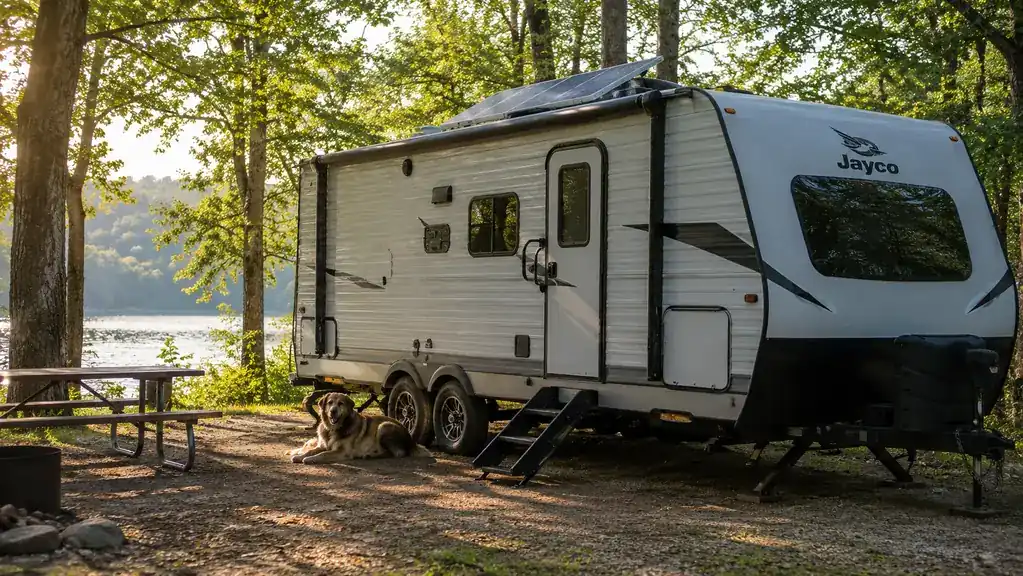
I spent two summers running a single 100W panel and a portable power station before I admitted the truth: the little fridge and the dogs' fan were going to win, and I needed real roof power. When I finally shopped for a 200W kit, I narrowed it down to two boxes, the ECO-WORTHY 200W solar panel kit and Renogy's 200W solar kit. The short answer is that the ECO-WORTHY kit is the better fit for most campers, because it puts two 100W panels, a 30A PWM charge controller, two sets of Z mounting brackets, and a 16.4 foot cable pair in one box for less money, while Renogy earns its higher price with cleaner manuals and a support network that is easier to actually reach.
To be clear, I did not set up both kits side by side on the same roof. I have one 2016 travel trailer, 21 feet, towed by my pickup, and I am not about to drill two sets of brackets into it. What I did was run the ECO-WORTHY kit through a full season of weekend trips and a two-week boondocking stretch in Vermont, then compare every claim in its listing against Renogy's published specs, owner forums, and the experiences of the campers I meet in state parks. That is the honest version of this comparison, and it is the one I would want to read before spending my own money.
| ECO-WORTHY 200W Kit | Renogy 200W Kit | |
|---|---|---|
| Price | Costs less than the Renogy kit for a complete 200W setup | Sits at the higher end of the 200W starter market |
| What's in the box | Two 100W panels, 30A PWM controller, two sets of Z brackets, one 16.4 ft 10 AWG cable pair | Two 100W panels, controller, mounting hardware, and cabling |
| Panel efficiency | Monocrystalline cells rated up to 21.5% | Monocrystalline cells in the same efficiency range |
| Build quality | Corrosion-resistant aluminum frame, 31.6 lb total | Aluminum frame with a long track record of consistent quality control |
| Manuals and support | Functional but thin documentation | Clearer manuals and a bigger, easier-to-reach support network |
| Best for | Campers who want the whole kit in one box without stretching the budget | Campers who prefer an established brand with strong after-sale support |
What's Actually in the Box
The listing is refreshingly specific, and the box matches it. You get two 100W monocrystalline panels, a 30A PWM charge controller, two sets of Z mounting brackets, and one pair of 16.4 foot 10 AWG cables with MC4 connectors already attached. Each panel is 35.2 inches long, 23.1 inches wide, and 1.3 inches thick, with a corrosion-resistant aluminum frame. The whole kit weighs 31.6 pounds, which is manageable for one person to carry up a ladder, though I will admit I had the dogs supervise the first roof install.
The 30A PWM controller handles both 12-volt and 24-volt systems, which matters if you ever move the kit to a shed or a bigger rig. I run mine in a 12-volt setup with the two panels wired in parallel, which is the simple path for a travel trailer with a standard house battery. The panel specs are printed on the box: maximum voltage 27.4 volts, amperage capacity 11A, and the MC4 connectors clicked together without adapters. Nothing in the kit made me run to the hardware store, which is more than I can say for the pieced-together system I started with six years ago.
One note on mounting: the Z brackets want to be on a flat surface, so I placed them where the roof has the least curve and used the holes as a template before drilling. I sealed every screw with the same lap sealant I use on the trailer's roof vents, let it cure overnight, and the panels have not moved since. If you have never drilled into a trailer roof, that is the part to go slow on, not the wiring.

How I've Run It on My 21-Foot Trailer
My setup is not fancy. The trailer is a 2016 model, 21 feet, towed by my pickup, and I camp in Vermont state parks and boondocking spots from late spring to mid fall. The ECO-WORTHY panels sit flat on the roof with the Z brackets, and the cables run down the front corner into the battery compartment where the 30A controller lives. I mounted the controller close to the battery so the wire runs stay short, which is the one piece of advice I would give anyone doing this for the first time.
What do I actually run? A small fridge, LED lights, the water pump, my laptop and phone, and a little 12V fan for the dogs on warm afternoons. That is a modest load, and the kit's 800 watt-hours a day under four hours of full sunshine covers it with room to spare. On a three-day stretch of clouds last September, I still woke up to a battery above half, which is better than the single panel and portable power station I started with ever managed.
The one thing I changed was the battery, not the kit. The controller and panels have been on the roof for a full season, through rain, wind, and the kind of frost that makes the trailer creak at night, and nothing has loosened or corroded. The aluminum frame is rated for decades, and so far the only maintenance has been wiping bird droppings off the glass with a damp rag.
Where ECO-WORTHY Wins
The first win is the box. Two 100W monocrystalline panels, a 30A PWM controller, two sets of Z brackets, and a 16.4 foot pair of 10 AWG cables, all in one shipment, nothing else to buy. The cable run matters more than it sounds. On my 21-footer, 16.4 feet is enough to route from the roof down the front corner and into the battery compartment without splicing, and I did not have to buy a single extra connector. The listing promises 800 watt-hours a day under four hours of full sunshine, and on a clear June afternoon I have watched the battery climb back to a full charge by mid-afternoon with the fridge running.
The second win is the value. I am not going to quote a number because these kits move around, but the ECO-WORTHY kit costs less than the Renogy kit, and the difference is enough to buy a second battery or a proper battery box. For a camper moving up from a portable power station, that is the smarter spend. The efficiency rating is part of the story too: the monocrystalline cells are rated up to 21.5%, which is right in line with panels that wear a much bigger price tag.
Where Renogy Wins
Renogy wins the parts of solar that have nothing to do with watts. The company has been selling RV kits long enough that its manuals read like they were written by someone who has actually mounted a panel on a curved trailer roof, and the support network is easier to reach. Owner forums, walkthrough videos, and phone support are all thicker for Renogy, which is worth real money on the day something goes wrong at a campsite with no cell service and a battery at 30%.
The second Renogy win is consistency. Both kits use monocrystalline panels and aluminum frames, but Renogy has a longer track record of panels arriving flat, brackets lining up, and the contents of the box matching the photos. That is the kind of thing you cannot see in a spec sheet. My ECO-WORTHY panels have been fine, and the frames still look new after a season, but fine is not the same as a decade of owner reports. If I were outfitting a full-time rig where a panel failure means a real problem, I would pay the Renogy premium.
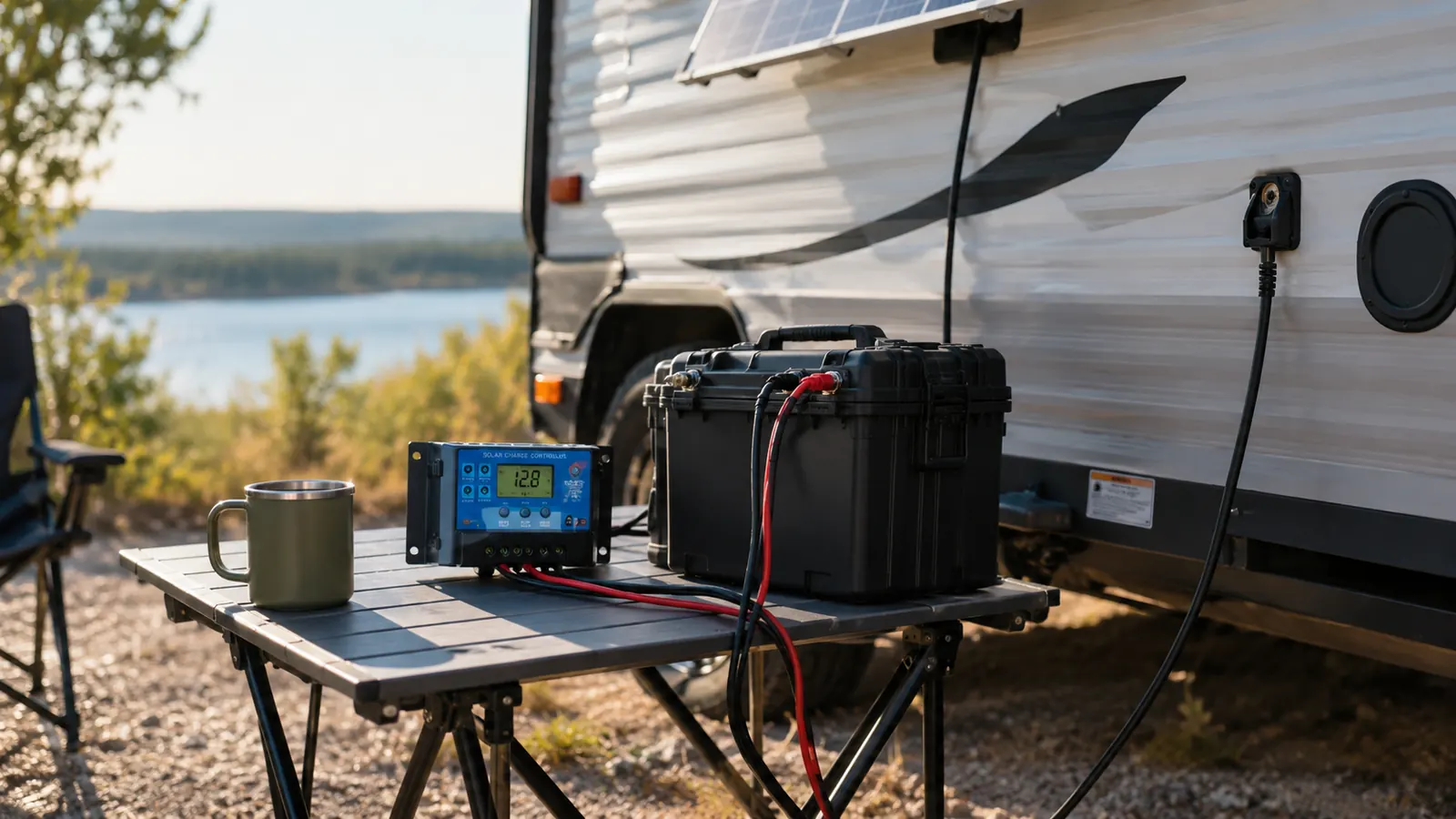
What the Spec Sheet Doesn't Tell You
The spec sheet will not tell you how the kit feels on a windy roof, or how the MC4 connectors seat, or what it is like to open the box at a campsite with the light going. It will not tell you that the Z brackets are forgiving enough to work on a slightly curved trailer roof, or that the 10 AWG cable stays flexible on a cold morning. Those are the details you only get from a season of use, and they are the reason I keep telling people to buy the complete kit instead of piecing one together.
It also will not tell you that both of these kits use PWM controllers rather than MPPT. PWM is simpler and cheaper, and on a small 200W system feeding a 12-volt battery, the real-world difference is small. If you build a much bigger system later, you will want an MPPT controller anyway, and you can upgrade the controller without touching the panels. That is the nice thing about starting with a kit like this: the panels are the long-term investment, and the controller is the part you can swap.
The kit I put on my own trailer
Two 100W panels, a 30A PWM controller, Z brackets, and a 16.4 foot cable pair in one box. If you are moving up from a portable power station, this is the kit to beat.
Amazon Check Today's Price on Amazon →Who Should Buy Which
Buy the ECO-WORTHY kit if you are a weekend and holiday camper like me, running a small fridge, LED lights, a water pump, and a 12V fan for the dogs on warm afternoons. The 800 watt-hours a day under four hours of full sun covers that load comfortably in the Northeast, and the money you save on the kit is better spent on a second battery. This is the kit I put on my own trailer, and I would buy it again.
Buy the Renogy kit if you live in your rig for months at a time, if you want the strongest support network behind you, or if a thin manual is going to keep you up at night. There is nothing wrong with paying more for a brand that answers the phone. I have been camping with solar for about six years, and I have learned that the best kit is the one you understand completely, whether that means the cheapest complete box or the one with the thickest manual.
And if you are still on the fence, think about the next three years, not the next three weeks. A kit like this is not a one-trip purchase. The panels will still be on your roof when the controller has been upgraded, the brackets will still be holding when the trailer has a new battery, and the brand you choose is the one you will be living with at 6 AM in a foggy state park. Choose the one you trust to answer questions, and choose the one that leaves you enough budget to actually use it.
The Bottom Line
Both kits will put 200 watts of monocrystalline panels on your roof and keep a 12-volt battery fed. The ECO-WORTHY kit does it for less money, with a generous cable run and a 30A controller in the box, and it has been steady on my trailer for a full season. The Renogy kit does it with a stronger support network and the confidence that comes from a brand with a longer track record. For my kind of camping, weekend trips and long stretches in state parks, the ECO-WORTHY box is the one I chose, and the one I would choose again.
Still deciding? Start with what fits your roof
Measure your roof, count what you actually run, and if the answer is a 200W kit with room to grow, the ECO-WORTHY box has everything you need to be charging by sundown.
Amazon Check Today's Price on Amazon →