
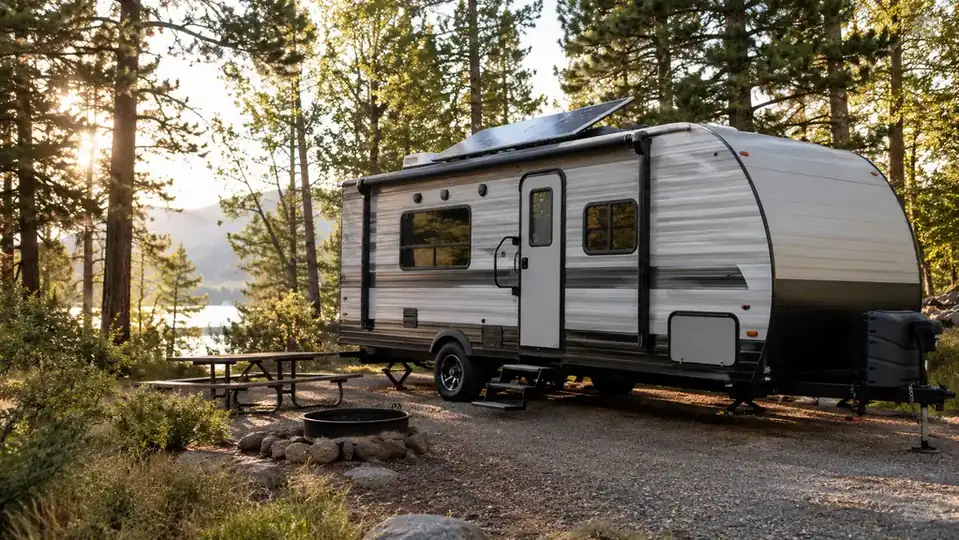
The first time I tried to boondock without solar, I woke up at 2 AM to a dead house battery, a fridge full of lukewarm food, and two dogs staring at me like I had personally failed them. That was six years ago, before I learned to think in watts instead of wishes. I am Joanne, I live in central Vermont, I camp in a 21-foot travel trailer from late spring to mid fall, and I have spent those six years slowly figuring out which off-grid gear earns its place on the roof. The ECO-WORTHY 200W Solar Panel Kit has been on my trailer for most of that time, and this is the long-term review I wish someone had handed me before I bought my first panel.
I am not an electrician. I am a retired school bus mechanic who learned solar the hard way: blown fuses, a dead battery on a cold night, and a lot of patient reading. So when I say the ECO-WORTHY kit is the setup I recommend to friends who want to camp off-grid without a master's degree in electrical engineering, I mean it as a mechanic, not a marketer.
The Quick Verdict
The ECO-WORTHY 200W kit is the rare solar setup that does exactly what it promises: it keeps my fridge, lights, phone charging, and a small 12V fan running for days on end, and it has done so for six seasons without a single failure.
Amazon Check Today's Price →Six Seasons of Off-Grid Power, One Simple Kit
If you want to park your trailer somewhere quiet and keep the fridge cold without listening to a generator, this is the kit I have lived with for six years. It is not the biggest system on the market, and it will not run an air conditioner, but it will do what it says, day after day.
Amazon Check Today's Price on Amazon →How I've Used It
My trailer is a 2016 model, 21 feet long, towed by my pickup truck. I camp mostly in state parks and on boondocking spots across the Northeast, which means I am often parked in full sun with no hookups and no shade. The ECO-WORTHY kit sits on my roof, two 100W panels wired together, feeding a 30A PWM charge controller that talks to my 12V house battery.
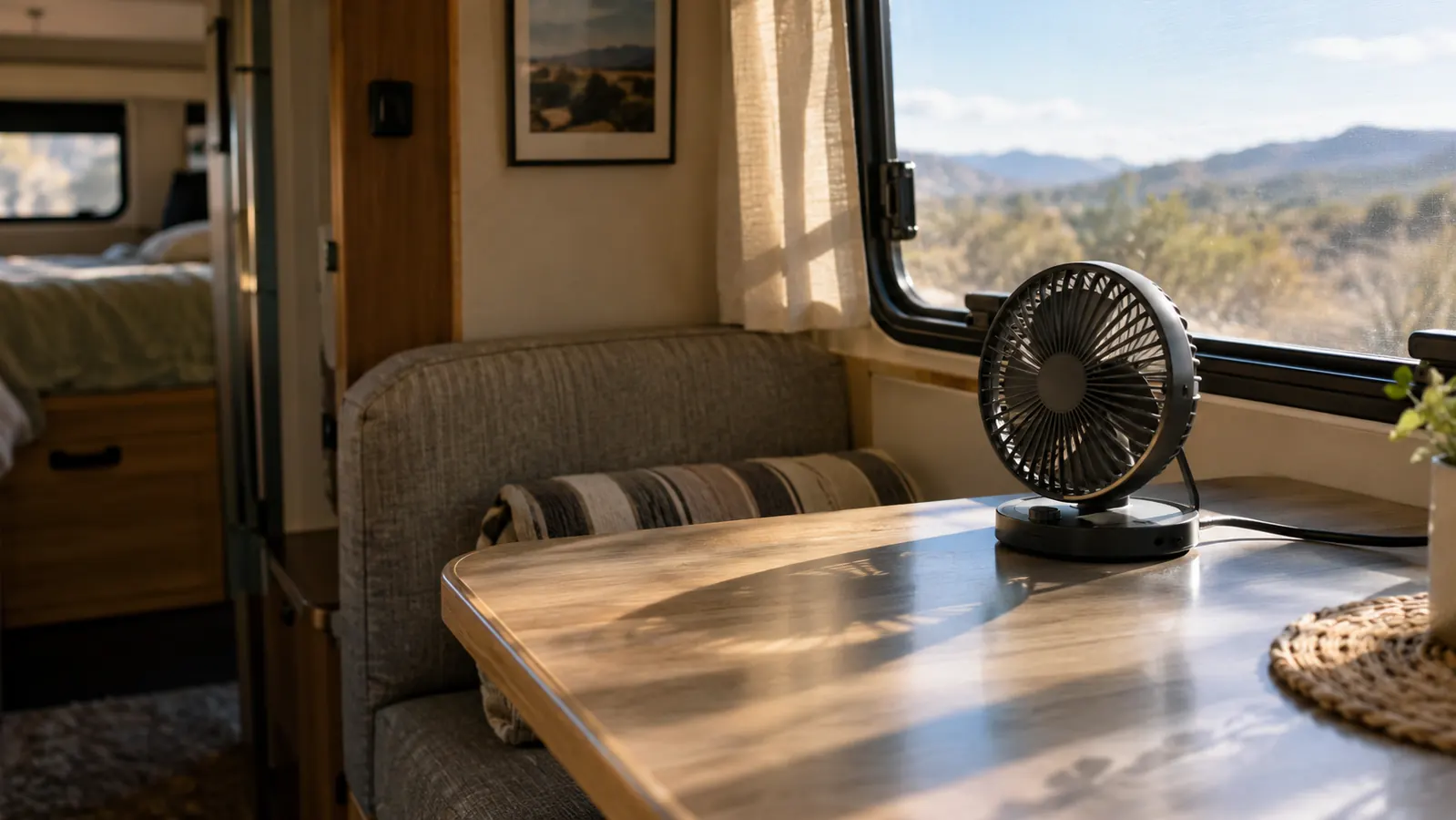
In a typical day of camping, I run a small fridge, a few LED lights, my phone and tablet chargers, and a small 12V fan for the dogs on warm afternoons. That is my whole electrical life at camp, and the kit handles it without complaint. On a good sunny day I wake up to a full battery, use power all day, and go to bed with the battery back to where it started. On a cloudy stretch, I am more careful, but I have never been stuck.
I have also used this kit in the shoulder seasons, when the sun sits lower and the days are short. It produces less, of course, but it still produces. I have camped into October in Vermont with this setup and kept the fridge cold and the lights on. That is the honest test, and it passed.
Before this kit went on the roof, I tried the cheap route and learned why it is cheap. My first year of boondocking ran on a single portable panel I leaned against the trailer and a power station I carried inside. It worked until it rained, until the panel slid off the picnic table, and until a cloudy Tuesday in June left the battery too low to start the fridge compressor. That is when I started reading about rooftop kits and decided to stop piecing things together. Last July, I put the ECO-WORTHY kit to its real test: five nights at a state park with no hookups and a forecast that promised sun. Four of the five days delivered. I woke each morning to a battery that had climbed back to full overnight, ran the fridge, the lights, the chargers, and the little fan through the afternoon, and went to bed with the controller showing a healthy charge. The one cloudy day, I skipped the blender and let the fridge do its thing, and the battery still carried us through the night. That is the camping I bought this kit for.
What the Kit Actually Includes
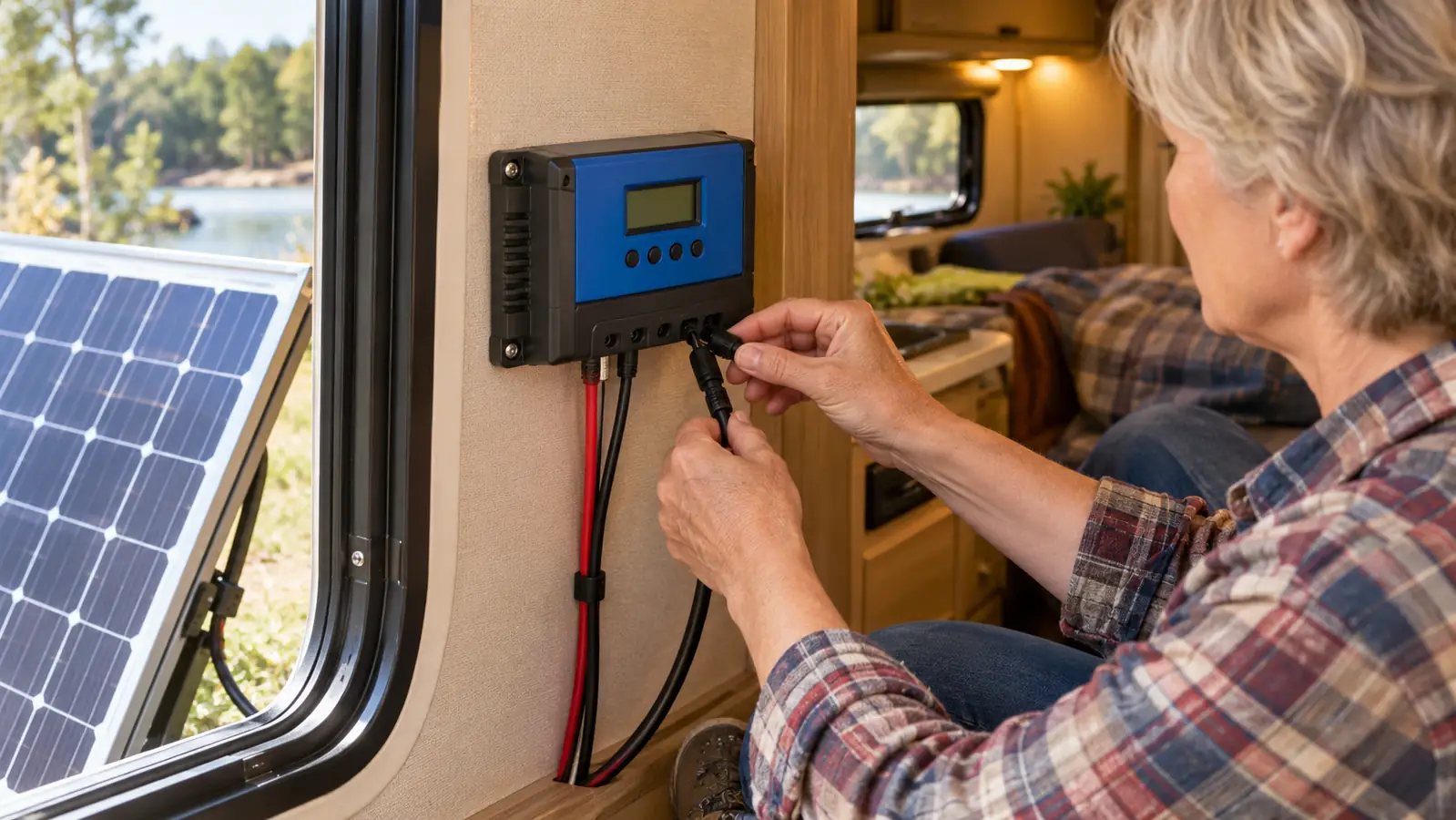
The ECO-WORTHY 200W kit comes with two 100W monocrystalline panels, two sets of Z mounting brackets, a 30A PWM charge controller, and a pair of 16.4-foot 10 AWG cables. The panels are framed in corrosion-resistant aluminum, which matters when you live in a state where roads are salted half the year and your roof sees rain, snow, and tree sap.
Each panel is rated at 100W, and together they are rated for a maximum power of 200W. The specs say the panels can produce up to 800Wh per day under four hours of full sunshine, and in my experience that number is honest in good conditions. The panel dimensions are 35.2 inches by 23.1 inches by 1.3 inches, and the whole kit weighs 31.6 pounds, which is light enough for one person to haul onto a trailer roof without a second set of hands.
The charge controller is a 30A PWM unit, which is the simpler, more affordable type of controller. It is not a fancy MPPT controller with a screen full of graphs, but it does the job. I mounted mine inside the trailer near the battery, and it has been there ever since.
Installation took me a long afternoon, mostly because I am particular about roof work. I laid the two panels side by side on the roof, lined them up with the trailer's center line, and used the Z brackets to bolt them down through the roof deck. The included cables are 16.4 feet long and 10 AWG, and the MC4 connectors clicked together with a satisfying snap. I did not need to crimp or solder a single thing. The whole kit is light enough that I hauled it up the ladder in two trips, one panel at a time. The monocrystalline cells are rated up to 21.5% efficiency, which has been good enough to keep my battery full on every sunny day I have given them.
How It Performed Over Six Seasons
The first season, I was suspicious. I had been burned by cheap gear before, and I kept waiting for the panels to underdeliver. They did not. The ECO-WORTHY kit charged my battery every single day I gave it sun, and on the rare overcast day it still trickled in enough to keep the fridge running overnight.
The second season, I got lazy. I stopped checking the charge controller every few hours and started trusting it. That trust was earned. The 30A PWM controller has never once let my battery overcharge, and the only dead battery I have dealt with since installing this kit was caused by me, not by the gear.
By the fourth season, the panels had been through hail, wind, and a tree branch that scraped across the roof. The scrape happened in September of my third season, when a line of thunderstorms rolled through the campground. I had parked near a tall pine, and a branch came down across the roof during the worst of it. I climbed up the next morning expecting the worst, but the aluminum frame showed nothing more than a few scratches, and the output was unchanged. I have also watched these panels shrug off hail the size of peas, wind that flattened my awning, and a Vermont winter's worth of snow and ice. The corrosion-resistant frame is not a marketing line; it is the reason the panels still produce at the same rate from year one to year six.
The dead battery story is worth telling because it is the closest this kit has ever come to failing me. It was a Friday afternoon in July, and I had been packing up camp, which means the fridge door stayed open while I loaded the truck. Three hours later, the battery was flat. The kit did exactly what it was supposed to do; I was the one who left the door ajar. I hooked up the truck, let the alternator work for about an hour, and the system has been fine ever since.
The kit did exactly what it was supposed to do; I was the one who left the door ajar.
What It Runs and What It Does Not
Let me be plain about what this kit will and will not do, because that is the part of the review nobody writes. With 200W of panels and a 12V house battery, I comfortably run: a small 12V fridge, LED lights, phone and tablet chargers, a small 12V fan, and occasionally a low-wattage kitchen appliance like a coffee grinder or a blender for about a minute at a time.
What it will not do is run an air conditioner, a space heater, a hair dryer, or anything with a heating element that draws serious power. I have a friend who camps with a 2000W generator and a rooftop AC unit, and she needs every watt of it. This kit is not that. It is a system for keeping the essentials alive off-grid, not for living like you are at home.
I also want to be honest about the daily output number. The kit is rated for 800Wh per day under four hours of full sunshine, and that is a real number in perfect conditions. In the real world, with trees, clouds, and a roof that is not always angled perfectly at the sun, I plan on more like 500 to 600Wh on a good day and less on a bad one. That is still enough for my fridge, lights, and fan, but it is worth knowing before you buy.
Let me give you a real day. On a typical July morning, I wake up, put on a pot of coffee with a low-wattage percolator, and charge my phone and tablet while I eat breakfast. The fridge runs all day, cycling on and off as it needs to. In the afternoon, if it is warm, I turn on the small 12V fan for the dogs. At night, I run a couple of LED lights for a few hours. That whole routine sits comfortably inside what 200W of panel can deliver in the Northeast, even on a partly cloudy day. The day I want to run a hair dryer at camp is the day I book a site with hookups.
What I Liked
- Complete kit in one box: two 100W panels, Z brackets, 30A PWM controller, and 16.4-foot cables
- Corrosion-resistant aluminum frames that have survived six New England seasons, including hail and a tree branch
- Simple enough for a first-time solar camper to install in a single afternoon
- Six seasons of steady output with no drop in performance that I can measure
Where It Falls Short
- Will not run an air conditioner, space heater, or anything with a serious heating element
- Real-world daily output in the Northeast is closer to 500 to 600Wh, not the rated 800Wh, once clouds and trees are factored in
- The 30A PWM controller is basic; it does not offer the efficiency gains of a more expensive MPPT controller
Who This Is For
This kit is for the camper who wants to park in a quiet spot, keep the fridge cold, charge their phone, and run a small fan on a warm afternoon, all without listening to a generator. It is for the person who camps in state parks and boondocking spots where hookups are not available, and who is willing to be a little thoughtful about power use. It is for the person who wants a simple, reliable system they can install themselves and then forget about.
If you are new to solar, this is also a forgiving place to start. The ECO-WORTHY kit is not the cheapest way to get 200W, but it is one of the most complete. Everything you need comes in the box, the instructions are clear enough for a retired bus mechanic to follow, and the monocrystalline panels are forgiving of less-than-perfect placement. I have recommended this exact kit to three friends, and all three of them are still using it years later.
Who Should Skip It
If you want to run an air conditioner, a microwave for more than a minute at a time, or anything with a serious heating element, this kit is not for you. You need more panels, a bigger battery, and probably an inverter that can handle the surge. I say that with love, because I have been the person who buys one size too small and then blames the gear.
I would also skip this kit if you camp mostly in deep shade or in the dead of winter, when the sun is low and the days are short. The panels will still produce something, but if you are relying on solar to keep a battery alive in a Vermont January, you are going to be disappointed. This is a three-season kit for the Northeast, and a four-season kit for places with more sun.
The Bottom Line
Six years ago, I woke up to a dead battery and two disappointed dogs. Today, I park my trailer in the middle of nowhere, the fridge runs, the lights work, and the small 12V fan keeps the dogs comfortable on warm afternoons. The ECO-WORTHY 200W Solar Panel Kit is not the flashiest or the most powerful system I have seen, but it is the one I have trusted for six seasons, and it has never let me down.
Ready to Park Somewhere Quiet?
If my six seasons with the ECO-WORTHY kit sound like the kind of camping you want, check the current price on Amazon. The kit is the same one that has been on my roof for six years, and it is still the first thing I recommend to friends who want to boondock without a generator.
Amazon Check Today's Price on Amazon →