
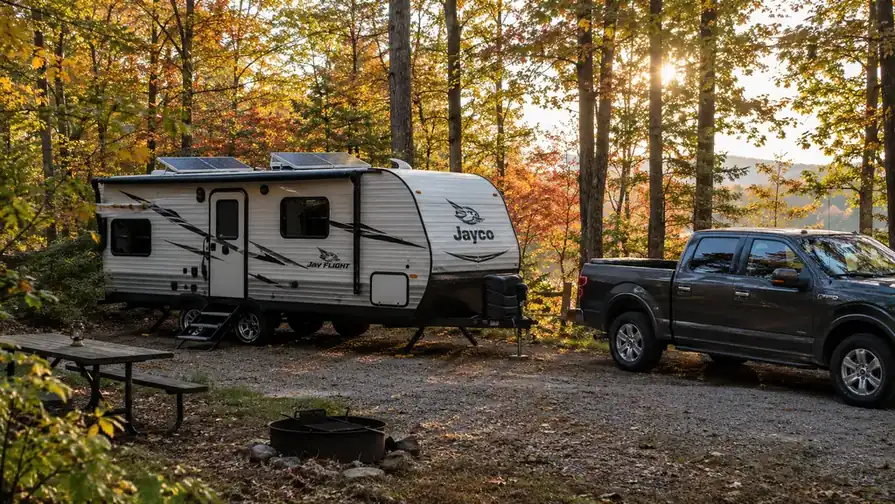
The night that changed my mind about roof panels was a cold one in late September. I was parked in a state park in the Northeast, the dogs curled on the bench seat and the cat on the dashboard, and the little portable power station that had carried me through six years of camping finally gave up. The fridge cycled on, the fan hummed for the dogs, and the station quietly died. I sat in the dark with a dead house battery and a very warm cat, and I remember thinking that I had fixed school buses for thirty years and could not keep the lights on in my own trailer. By morning I had a list of roof-mounted kits to read about, and the ECO-WORTHY 200 Watt 12 Volt/24 Volt Solar Panel Kit was at the top of it.
I am a retired school bus mechanic. I have fixed enough electrical gremlins to know the difference between a bad connection and a system that is simply too small. That night was the second one. My first solar setup was a single small panel and a portable power station I carried in from the truck. It worked fine for weekends, but I had started taking longer trips, and somewhere along the way I outgrew it. I did not need another portable box to remember to charge. I needed power that lived on the trailer and worked when I arrived. So I spent about a month reading. The conversations that kept coming up sounded like my life: a 21-foot travel trailer, a pickup truck, and a woman who cooks most meals at camp. And the ECO-WORTHY kit kept coming up in those conversations.
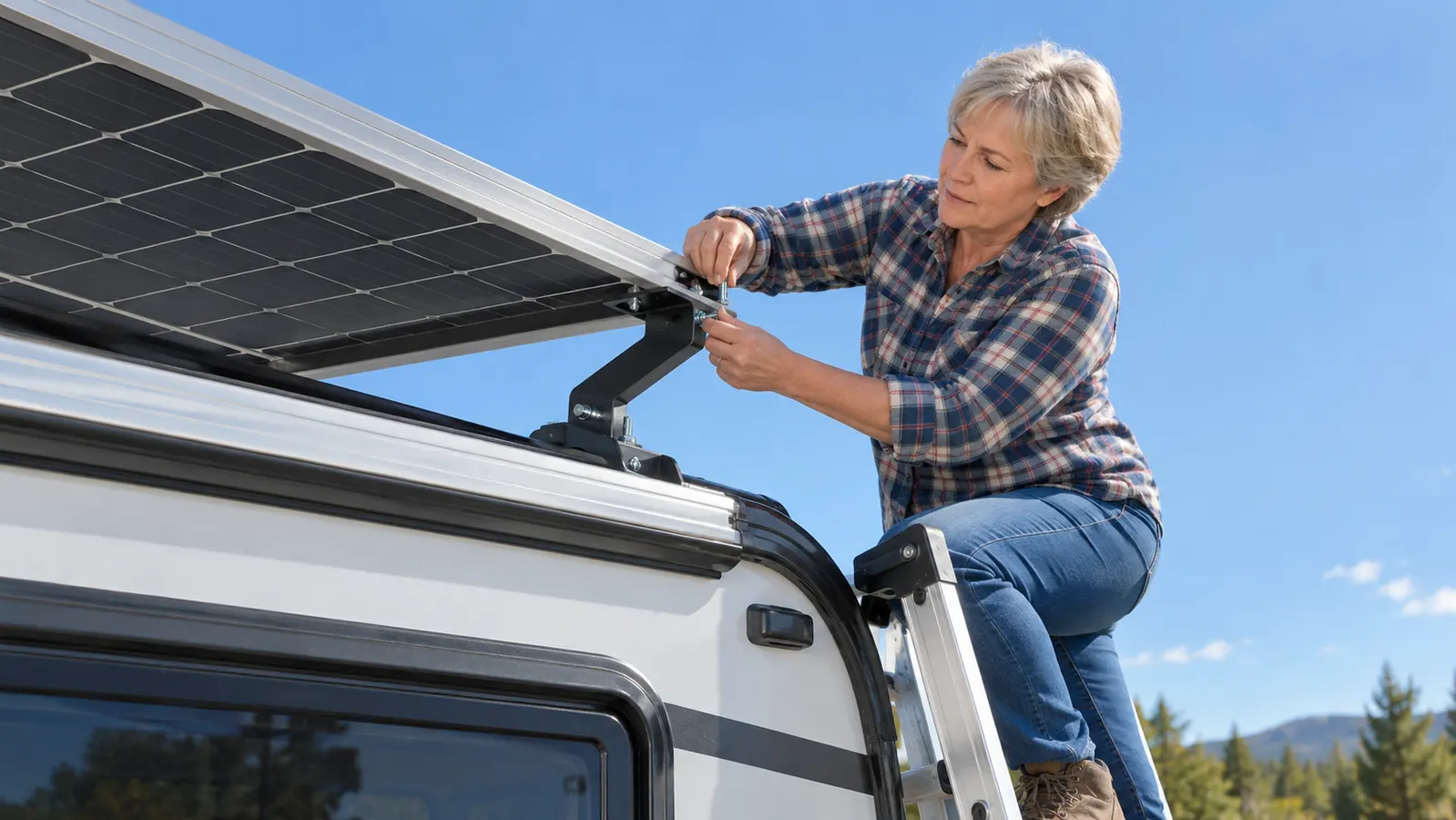
I did not buy it on the first read. I bought it after weeks of watching how other campers used it, what they ran, and what they admitted they could not run. That last part mattered to me. Anybody can sell you the sunny afternoon. I wanted to know about the cloudy Tuesday. The kit arrives with two 100 watt monocrystalline panels, a 30A PWM charge controller, Z mounting brackets, and a pair of 16.4 foot cables. The panels sit in corrosion-resistant aluminum frames, and the whole thing weighs 31.6 pounds. That last number made sense to me before I even opened the box, because I have carried enough gear up trailer steps to know what thirty pounds feels like.
The install took a weekend, and I did it alone, which I say not as a brag but as a measurement. I measured the roof of the 21-footer, laid the two panels out side by side, and bolted them down with the Z brackets. Each panel is 35.2 inches long, 23.1 inches wide, and 1.3 inches thick, a manageable footprint on a trailer roof. The MC4 connectors clicked together the way they should. I ran the cable down through the existing grommet, wired the controller in near the battery, and the whole thing just worked. No drama, no sparks, no swearing. That is rare in my line of work, and I have learned to appreciate a job that goes quiet.
What surprised me was not the panels. It was the quiet. No generator hum, no extension cord, no trip to the dump station to charge the battery. The fridge ran. The little 12V fan kept the dogs comfortable on warm afternoons. I charged my phone and ran a low-wattage kitchen appliance when I needed it, and I stopped checking the battery gauge every hour. The kit is rated for about 800 watt-hours a day under four hours of full sun, and that number matched my real life better than any spec sheet I had read before, because it assumed a normal day, not a perfect one.
I will be honest about what it did not do. On a string of cloudy days in the fall, I still watched the battery gauge drop. I learned to save the fan for the sunny afternoon and cook the big meal early. I learned that a 200 watt kit is a working tool, not a promise of endless power. Solar does not mean unlimited. It means enough, if you respect what enough is. That is the part nobody writes on the box, and it is the part that kept me from being disappointed later.
The fridge ran. The little 12V fan kept the dogs comfortable on warm afternoons. For the first time in six years, I stopped planning my day around the battery.
Tired of babysitting a portable power station?
This is the kit I finally bolted to the trailer roof: two 100W monocrystalline panels, a 30A PWM controller, and the brackets to mount them. See today's price on Amazon.
Amazon Check Today's Price on Amazon →
The ECO-WORTHY kit has been on my roof for two full seasons now, and I have mostly stopped thinking about it, which is the highest compliment a retired mechanic can give any piece of gear. The aluminum frames have held up to highway wind and the occasional low branch. The controller does its job without fuss. I check the connections twice a season, the way I check the trailer tires, and that is about the whole routine. I have had gear that needed attention every trip. This is not that gear.
The part I did not expect was how much my camping changed. I stopped hunting for the one campsite with electric hookups. I stopped running the truck to charge the battery. I started taking the longer loops in the state parks, the ones with no services at all, because I knew the fridge would still be cold in the morning. That is a freedom you cannot measure in watts.
I also learned what I will tell anyone who asks. The kit is not magic, and I am not going to pretend it is. You still need to match your expectations to the sun. You still need a battery worth charging. You still need to be honest about what you run on a cloudy day. But if you have a 12 volt system and a little flat roof space, this is an honest way to get steady power without a generator, and it does not ask much of you in return.
What I'd Tell You If We Were Sitting at My Kitchen Table
I would pour you a cup of coffee and start with this. Write down what you actually run, not what you dream about running. A fridge, a fan, a phone, maybe a small appliance. Add it up. If your list looks like mine, a 200 watt ECO-WORTHY kit with a 30A controller is a reasonable place to land. Bolt it down with the brackets in the box, run the cables through a clean grommet, and give yourself one full sunny day to trust it. And when the cloudy string of days shows up, do not panic. Cook early, let the fan rest, and remember that the sun always comes back. Solar rewards patience, and patience is something I have a lot of now.
The kit I would buy again
The ECO-WORTHY 200W kit is still on my roof and still doing its job. If you are ready to stop babysitting a portable station, check today's price on Amazon.
Amazon Check Today's Price on Amazon →