
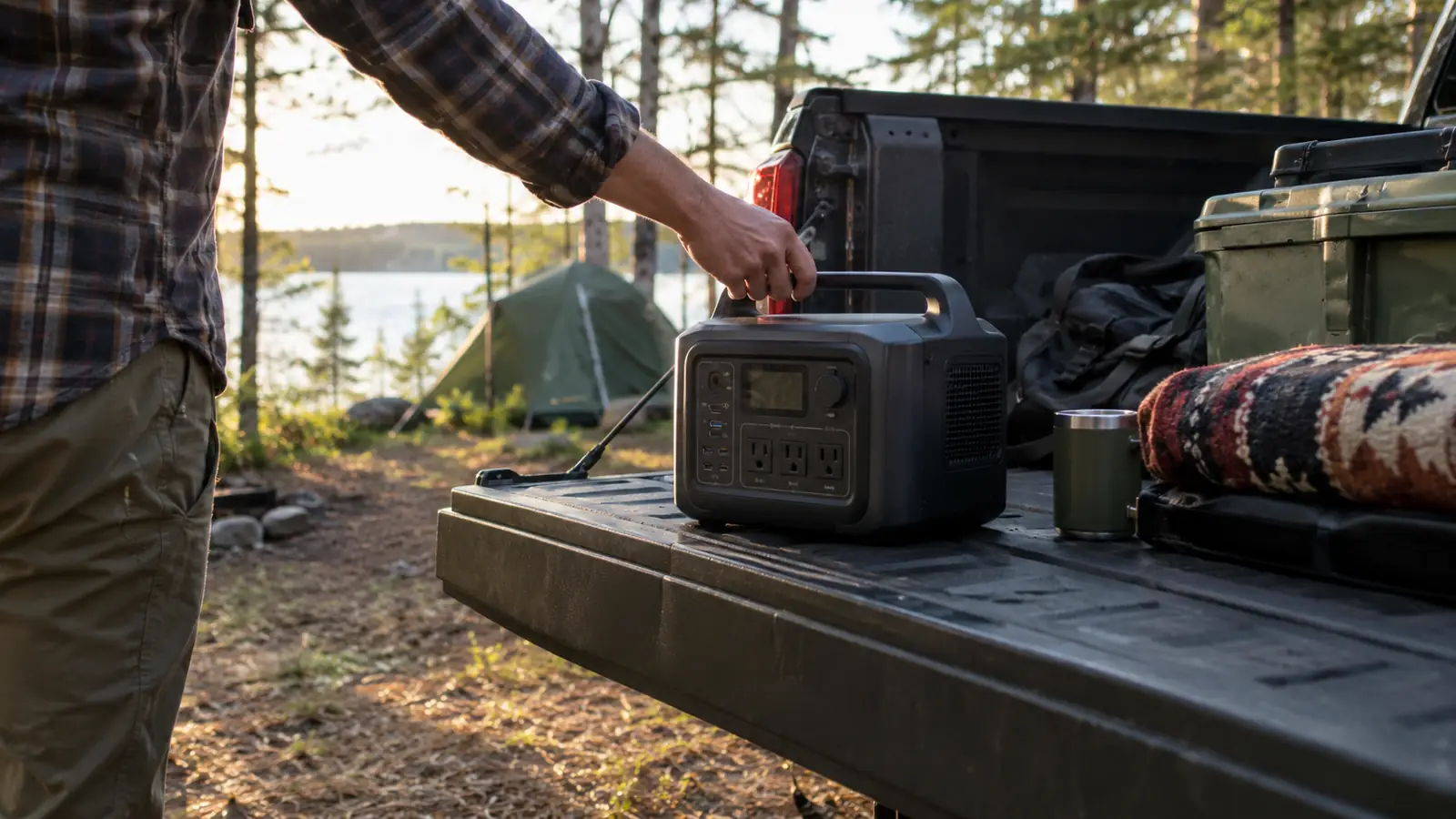
I bought the Jackery Explorer 300 in the spring of 2023, mostly because I was tired of killing the house battery in my 21-foot travel trailer every time I wanted a cup of coffee away from a hookup. Three seasons later, with a lot of nights in state parks and boondocking spots across the Northeast, I have opinions. Some of them are glowing. Some of them are the reason I keep a notebook of what I plug in and when.
Here is the honest version, including the parts the product page does not put in bold.
The Quick Verdict
The Jackery Explorer 300 is the best small power station I have owned for keeping phones, a fan, and a small fridge going on short trips, as long as you respect its limits and do not treat it like a generator.
Amazon Check Today's Price →Ready to stop draining your trailer battery every weekend?
The Jackery Explorer 300 has handled two full seasons of my camp cooking, dog fan, and phone charging without a complaint. Check today's price on Amazon and see if it fits your rig.
Amazon Check Today's Price on Amazon →How I've Used It
For context, I am Joanne. I retired after 30 years as a school bus mechanic, I live in central Vermont, and I camp from late spring to mid fall in a 2016 travel trailer that I tow with my pickup. I cook most of my meals at camp. I travel with two dogs and a cat, and on warm afternoons I run a small 12V fan for them, which is exactly the kind of steady, modest draw that a power station like this was made for.
My first setup was a single small solar panel and a cheaper power station that died on me in year two. I learned the hard way that rated watts and real-world watts are not the same thing. So when I replaced it, I read a lot of forums, checked the Jackery specs against the things I actually own, and landed on the Explorer 300. It is rated at 292Wh, weighs 7.1 pounds, and the item dimensions are listed at about 9 by 5 by 8 inches, which means it fits on the floor of my trailer's dinette without tripping over it.
On a typical weekend I use it for three jobs: charging two phones and a tablet overnight, running the small 12V fan for the dogs on warm afternoons, and giving my little fridge a boost when I am parked in full sun and the trailer battery is working hard. It has never once let me down on those jobs. The catch is that I have to think about the order in which I do them. Phones charge at night when nothing else is drawing. The fan runs during the hottest part of the day. The fridge gets its boost in the morning, before the sun is high and while the trailer battery is still resting. Once I settled into that rhythm, the unit stopped being something I worried about and started being something I just used.

What Nobody Tells You Before You Buy
The first thing nobody tells you is that 292Wh sounds bigger than it feels. It is enough for a weekend of phone charging and a fan. It is not enough to run an electric heater, a full-size fridge, or any appliance that draws close to its 300W maximum for very long. The math is simple: a 300W load on a 292Wh battery gives you under an hour of full-tilt run time. I learned this the hard way on a cold May night, when I plugged a small electric blanket into the unit without checking the draw. The blanket wanted more than I guessed, and by the time I woke up cold at 3 a.m., the Jackery was done. That was my fault, not the unit's, but it is exactly the kind of mistake the product page does not warn you about. Do the math before you plug in, not after.
The second thing is that the Jackery Explorer 300 charges itself slower than you hope. From empty, the wall charger takes about four hours, which matches the listed charge time in my experience. That is not a problem if you plug it in when you get home from a trip and leave it overnight. It is a problem if you show up at camp with a dead unit and expect it to be ready for dinner. I learned to make charging part of my unpacking routine, the same way I fill the fresh water tank before I park. Now the wall charger lives in the same tote as the water hose, and the unit goes on the counter the night before a trip.
The third thing is the one that almost sent me back to the drawing board: you have to match the port to the device. The Jackery has two AC outlets, a 100W USB-C PD port, two USB-A ports, and a 120W car port. That sounds like plenty, and it is, as long as you remember that a device plugged into the wrong port will charge slowly or not at all. I spent one whole afternoon convinced the unit was broken before I realized my tablet wanted the USB-C port, not the USB-A one. The USB-A ports are fine for a phone, but the tablet wants the higher output from the USB-C PD port. Now I have a label on the lid of my power tote: tablet on USB-C, phones on USB-A, fan on the car port.
The fourth thing nobody tells you is that you will start reading labels. Everything in my trailer now has its wattage written on it in permanent marker, because the Explorer 300 has a 300W ceiling and a 292Wh tank, and both numbers matter. A 300W load will empty it in under an hour. A 30W load will run all evening. Learning to tell the difference before you plug in is the whole game, and it is the difference between a unit that serves you and a unit that surprises you.
The day I stopped treating the Jackery Explorer 300 like a generator and started treating it like a very well-organized 292Wh lunchbox is the day it became my favorite piece of camp gear.
What It Does Well
Let me be specific about the wins, because there are a lot of them. The first is the weight. At 7.1 pounds, this is the first power station I have owned that I do not groan about lifting from the truck to the picnic table. I am 58 and I have a mechanic's back. I notice these things. It is genuinely compact, with item dimensions listed at about 9 by 5 by 8 inches, and it tucks under the dinette seat without stealing storage I need for food. My old unit was nearly twice the weight and lived in the truck bed because nobody wanted to carry it. This one lives in the trailer.
The second win is the USB-C PD port. That 100W port charges my tablet in about the same time as the wall charger at home, and it means I do not need to run the trailer's inverter to charge my laptop on a cloudy day. Last September I spent a rainy Tuesday working from the dinette. I ran my laptop off the USB-C port for about three hours, kept my phone on a USB-A port, and still had enough left in the evening to run the fan for the dogs. A few years ago I would have sat in the truck with the engine running to charge a laptop. I did neither.
The third win is the battery chemistry. This version of the Jackery Explorer 300 uses LiFePO4 cells, which the specs say are good for over 4,000 charge cycles. I have run it through three seasons of weekend trips, which means I am barely scratching the surface. I cannot test 4,000 cycles in a summer, but I can tell you that after two years of regular use, I have not noticed any drop in how long it holds a charge.
The fourth win is the 120W car port. My fan is a small 12V unit, and being able to run it from the car port instead of tying up an AC outlet means I can keep the dogs comfortable without thinking about which plug is doing what. It is a small thing, but it is the difference between a unit that fits my camp life and one that fights it.
Where It Falls Short
I would be lying if I said the Explorer 300 is perfect, so here are the honest frustrations. The first is the charging time I mentioned earlier. Four hours from empty is fine at home and annoying at camp. If you rely on solar, the story is even slower. I have a small folding panel from my first setup, and on a good July day it would put back maybe a third of the unit's capacity by evening. On a cloudy day in the Northeast, it put back almost nothing. I treat solar as a top-up now, never the main event. The wall charger is the main event, and I bring it with me even on trips where I plan to use solar.
The second frustration is the runtime rating. The product page says the runtime is five hours, and that is true only for a very specific, modest load. If you run something near the 300W maximum, you will get far less. I have learned to think of the five-hour number as the best case, not the typical case.
The third frustration is that there is no way to expand it. The Jackery Explorer 300 is what it is. You cannot add a second battery pack to double the capacity, and you cannot daisy-chain another Jackery into it. I checked the larger models in the same lineup when I bought this one, and I decided the extra capacity was not worth the extra weight for weekend trips. But I made that decision knowing the Explorer 300 would never be more than it is. If your needs grow, you do not upgrade this unit, you replace it. That is fine for me, because my needs are stable. It would be a real limitation for someone who is just getting into camping and expects to add more gear over time.
The fourth frustration is one I do not see many reviews mention: the unit is light enough that a stiff breeze can knock it over if you leave it on a table edge. It went over onto the gravel once when a gust came up the valley, and it survived, and the plastic case is still fine. But it survived because I was lucky. I now keep it on the floor of the trailer or tucked against something solid, and I would tell anyone else to do the same.
What I Liked
- Weighs 7.1 pounds, so it is easy to move from truck to table, even with a mechanic's back.
- 292Wh capacity covers a full weekend of phones, a tablet, and the dog fan without drama.
- LiFePO4 cells rated for over 4,000 charge cycles, and after two seasons I have seen no drop in performance.
- The 100W USB-C PD port charges my tablet and laptop at wall-charger speed.
- Two AC outlets, two USB-A ports, and a 120W car port cover the modest jobs I actually have.
Where It Falls Short
- The 300W maximum rules out heaters, full-size fridges, and anything with a motor surge.
- Four hours to recharge from empty is slow if you arrive at camp with a dead unit.
- The five-hour runtime is a best case at a light load, not a typical number.
- There is no way to add capacity later; when my needs grow, I buy a new unit.

Who This Is For
The Jackery Explorer 300 is for the camper whose power needs are real but modest. If you want to charge phones and a tablet, run a small fan for the dogs on a warm afternoon, power a laptop for a few hours, or keep a small fridge going when you are parked in full sun, this unit will do all of it without drama. My little fridge draws only about 40 watts when it is running, and the Explorer 300 can carry it for a long stretch on a sunny afternoon, which takes real load off the trailer battery. It is also ideal for someone who camps in a trailer or tent and wants a backup that does not weigh as much as a spare tire.
It is also a great first power station, with one honest caveat: you have to be willing to learn its limits. The people who love this unit are the people who check the wattage on an appliance before they plug it in. I am that person now. I was not always.
Who Should Skip It
If you need to run an electric heater, a full-size fridge, a CPAP machine all night, or any appliance that draws close to 300W for hours, skip the Explorer 300. It is not built for that, and no amount of wishing will change the math. The same goes for anyone who wants to run power tools or anything with a motor that has a heavy starting surge. The 300W maximum is a ceiling, not a suggestion.
I would also tell a full-time RVer to look at a larger Jackery model or a unit with more capacity. The Explorer 300 is a weekend companion, not a primary power system. If you need to run a fridge and a furnace and a TV every single day, you will be recharging this unit constantly, and that will get old fast.
What I'd Tell a Friend
If we were sitting at my kitchen table in Vermont and you asked me whether to buy the Jackery Explorer 300, here is what I would say. It is the right tool for a specific job, and it is very good at that job. It will not run your whole campsite, and it is not a generator. But for the camper who wants to keep phones charged, run a fan, and give a small fridge a boost without draining the trailer battery, it is the most reliable little box I have used in six years of camping with solar. The dogs and the cat ride with me most trips, and the fan I run for them on warm afternoons is the single most-used thing this unit powers. I would not want to be without it.
Buy it if you understand the limits. Skip it if you need more. And whatever you do, charge it the night before you leave, because four hours at home beats four hours at the campsite.
My verdict after two seasons?
The Jackery Explorer 300 earned a permanent spot in my trailer. If your power needs are modest and you want a unit that just works, check today's price on Amazon.
Amazon Check Today's Price on Amazon →