
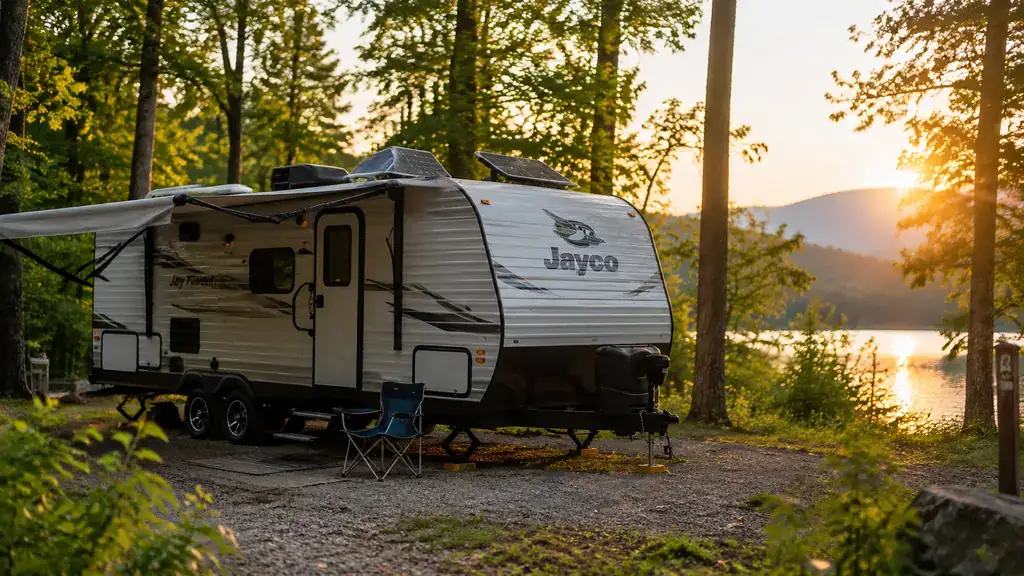
The first time my house battery went flat, it was 38 degrees out and the dogs were shivering on the foot of the bed. I had one small panel, a portable power station, and a whole lot of confidence I had not earned. That night cost me a good sleep and taught me more about camper electrics than any manual I had skimmed. Six years later, the same 21-foot trailer has a Renogy Rover 40A MPPT controller doing the thinking between the roof panel and the battery bank, and I have not woken up cold since.
I'm Joanne Tilley, 58, a retired school bus mechanic who camps from late spring to mid fall in state parks and boondocking spots across the Northeast. I cook most meals at camp, so my solar setup has to run a small fridge, a 12V fan for the dogs on warm afternoons, and the occasional low-wattage appliance without me hovering over it. This review is about the controller that made that true, and about the places where it will not carry you.
The Quick Verdict
The Rover 40A is the most dependable part of my camper's solar system. It tracks the panel, keeps the battery topped off, and has run for six seasons without a single fault. The LCD is fiddly and it is not the cheapest controller around, but it has never left me without power.
Amazon Check Today's Price →The controller that ended my cold nights
If you are building or upgrading a camper solar setup and you want one component you can stop thinking about, the Renogy Rover 40A is the controller I trust with my fridge and my dogs.
Amazon Check Today's Price on Amazon →How I've Used It
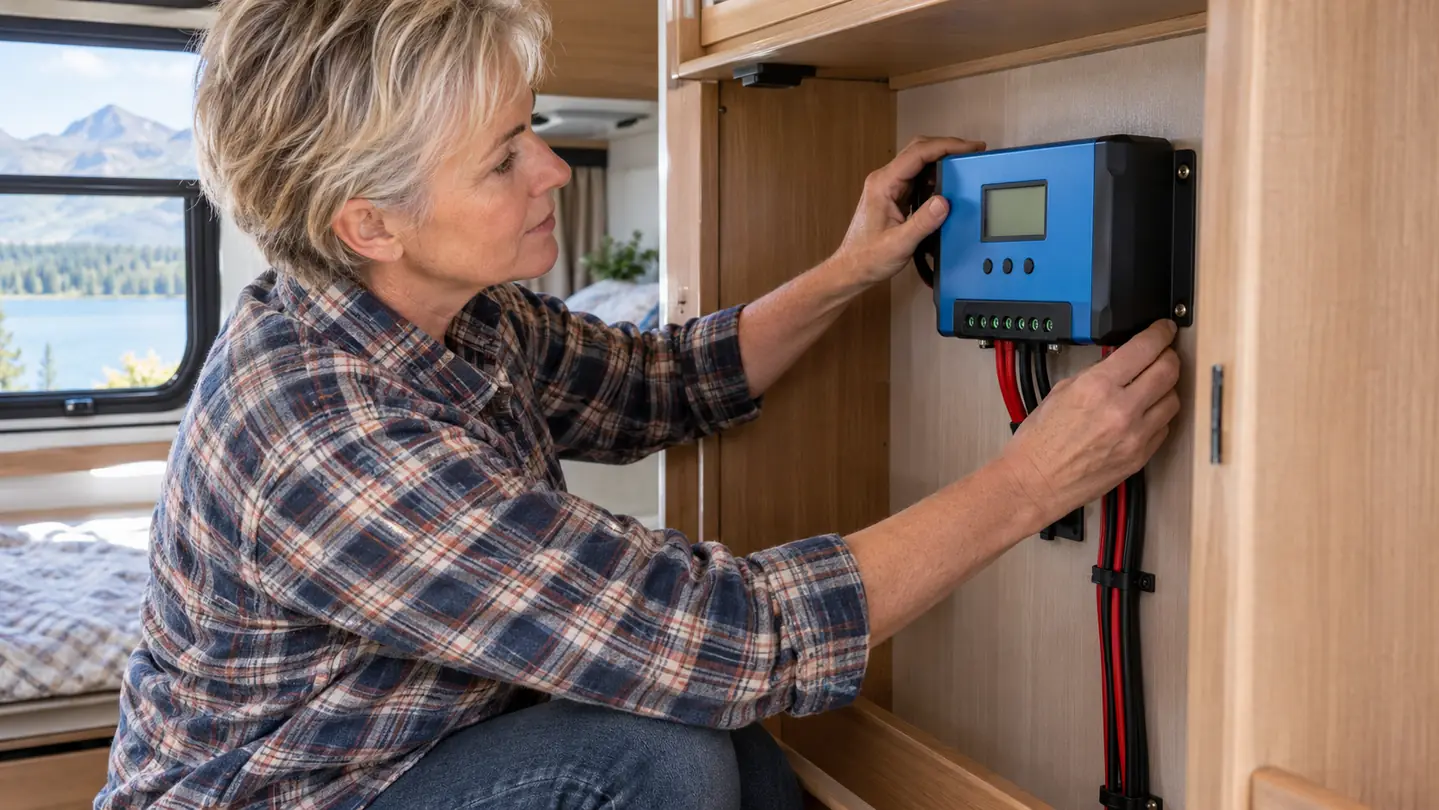
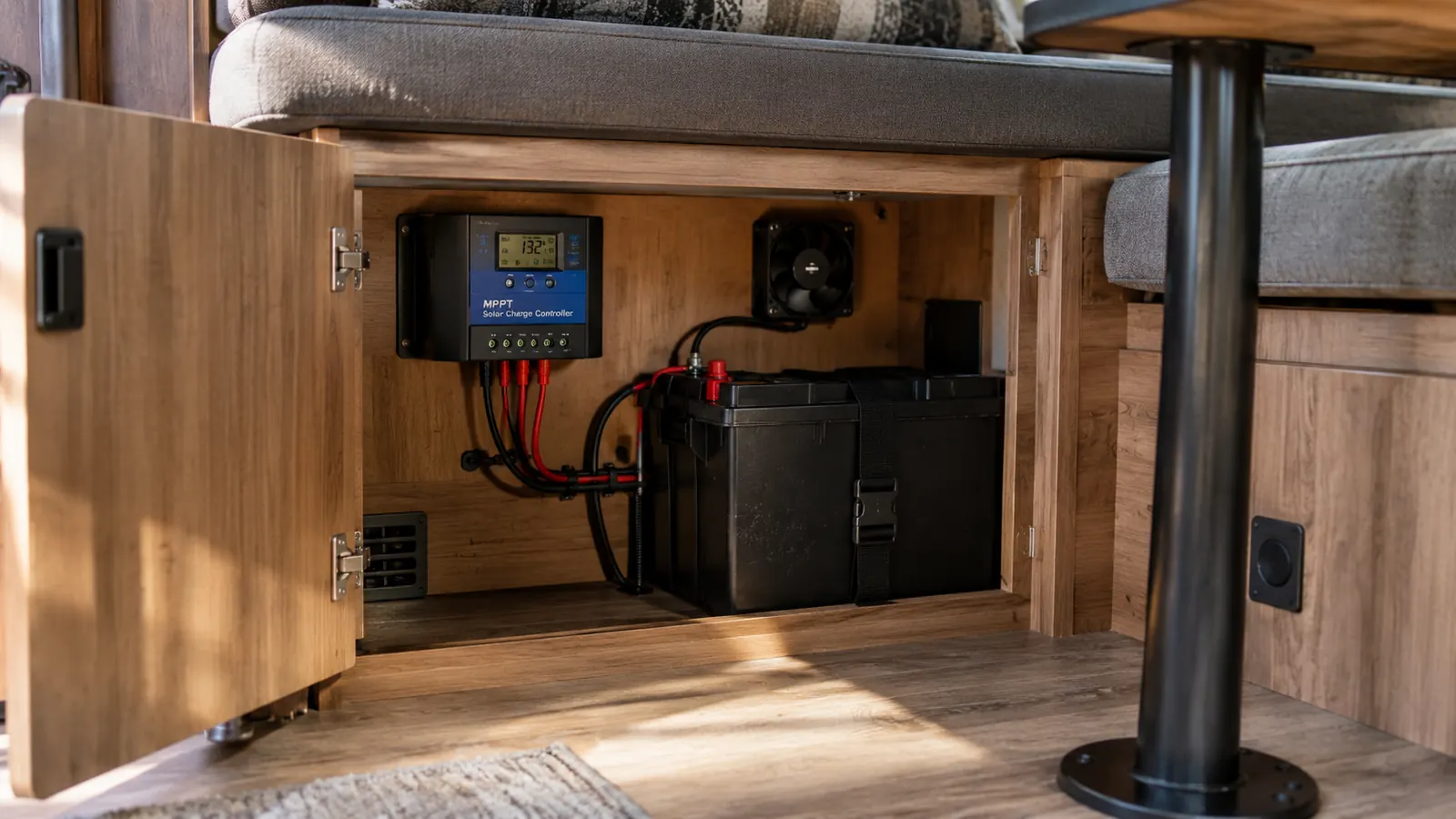
My setup is simple because my trailer is small. One roof panel feeds the Rover, and the Rover feeds a 12V house battery. The controller lives on the wall of the cabinet under the dinette, where I can see the LCD without crawling under anything. It has been there for six camping seasons, through rain, frost, and one stretch of July heat that made the trailer feel like a greenhouse. I check the display the way I check the gas gauge: a glance in the morning, a glance before bed, and no fuss in between.
I run a small fridge, LED lights, the water pump, and a 12V fan for the dogs on warm afternoons. On a hot day in July, that fan runs from about one o'clock until six, and on a clear day the Rover has the battery full again by two. I also plug in a low-wattage appliance now and then, usually my coffee grinder right after breakfast when the sun is doing most of the work. The Rover manages the charging so the battery gets what it needs and stops when it is full. The one time I do touch the controller is when I set the battery type on the LCD, and even that only happens when I change something on purpose.
The unit came with a remote temperature sensor, and I mounted it on the battery terminal the way the instructions show. That sensor is the part people forget about, and it is the part that matters most in Vermont, where a cold battery charges differently than a warm one. I check it when I check the battery water, which is about once a month, and the wire has held up fine through six seasons of cabinet doors closing on it. The controller also has built-in low-temp protection, so on the nights when it drops below freezing, I do not think twice about the battery being pushed too hard. I have enough other things to worry about at camp.
What the Specs Actually Mean
The Rover is a 40A MPPT controller that works on 12V or 24V systems and figures out which one it is looking at by itself. That auto-detection is the feature I appreciate most, because I am not the person who reads the manual first. I mounted it, connected the wires, and set the battery type on the LCD. It has not needed me since. The display is the whole interface, and it is adjustable for gel, sealed, flooded, and lithium batteries, which covers just about every battery a camper is likely to own.
That last part matters more than it sounds. A controller that charges a lithium battery the way it charges a flooded one will not do the battery any favors, and the difference shows up in how long the battery lasts. The Rover handles all four types, so I would not have to buy a new controller if I ever changed my battery plans. The LCD is where I set the battery type and where I check the battery status, and I can move through the settings without any special tools. It is not a fancy interface, but it is a complete one.
The hardware itself is plain and built for a wall. The aluminum housing measures 6.81 by 2.85 by 9.37 inches and weighs 1.1 kg, which is small enough to fit in the cabinet space I had, with room left over for the battery box beside it. Four mounting brackets come in the box, along with the remote temperature sensor. The whole thing is covered by a three-year material and workmanship warranty, which is the kind of thing you hope you never need and you are glad is there. I have never had to use it, and I take that as a good sign.
Installation took me an afternoon, and most of that was me being careful with the wire routing rather than the controller fighting me. My first pass at the cables went through the wrong gap in the cabinet, and the drawer underneath would not close. I pulled it all out, drilled one clean hole, and had it done in about twenty minutes. The brackets bolt to the wall, the controller mounts in place, and the cables connect without a second pair of hands or a phone call to the manufacturer. I have wired enough things over the years to appreciate a product that does not require a call for help. The Rover was that kind of install.
The Numbers That Matter
Renogy rates the Rover for a 98% conversion rate and 99% tracking efficiency. I cannot measure those numbers from my dinette table, but I can tell you what they look like in practice. On a partly cloudy day, the controller keeps pulling power from the panel even as the light shifts, instead of waiting for full sun the way my old setup did. The battery ends the day fuller than it ever did before I switched, and that is the only number I actually care about.
The operating range is another spec that matters more than it sounds: minus 40 to 149 degrees Fahrenheit. I have not camped at minus 40, and I hope I never do, but I have camped at 14 degrees and I have sat in a trailer at 95. The Rover did not care about either. The built-in low-temp protection is the part I rely on, because a battery that freezes is a battery that dies, and a battery that dies in October is a very long walk to the truck.
The 4-stage charging is the quiet workhorse of the whole system. The stages happen automatically, and which ones apply depends on the battery type you set on the LCD. I do not watch the stages do their thing. I just notice that the fridge is cold in the morning and the battery is full by early afternoon on a clear day. That is the whole point of a controller: you should not have to think about it, and I do not.
One morning last September I woke up to fog so thick I could not see the treeline, and I figured the battery would be down. It was not. I checked the LCD at six, expecting to plan my day around the truck, and the battery was sitting high enough that I made coffee without a second thought. The Rover had taken the dim early light and squeezed enough out of it to keep the fridge running all night. That same week we had three cloudy days in a row, and the battery never dropped below what I need for the fridge. My old PWM setup would have had me running the truck by day two. That morning is the reason I stopped checking the voltage every hour. The controller had earned the trust.
Where It Falls Short
The LCD is small and adjusting it is fiddly. That is fine in July when I am parked for a week, but it is less fine in October when I am wearing gloves and trying to change a setting before the light goes. One evening last fall I wanted to double-check the battery type before a cold night, and I stood there in the fading light poking the buttons with my reading glasses on. I got it set, but a bigger display would have made it a thirty-second job instead of a three-minute one. I have learned to do all my setup in the afternoon, in good light, before I need the system. That is a workaround, and I want to be honest that it is one. If Renogy ever makes a version with a bigger display, I will be first in line.
The other thing to know is that 40A is more controller than a single small panel needs. If you are running one panel and a modest battery like I am, you are not using the Rover's full capacity. That is not a problem, it just means you are paying for headroom. If you are planning to add panels later, that headroom is exactly what you want. If you are not planning to add anything, a smaller controller would do the same job for less money.
There is also no way to check on the controller from the truck or the camp chair. The display is where it is, and the box contains the controller, the remote temperature sensor, and the mounting brackets, nothing wireless. I mention this because some newer controllers advertise phone apps and remote monitoring, and if that is what you want, the Rover is not that. What it is, is a controller that does its one job very well and asks for nothing in return.
MPPT vs PWM: Why I Switched
My first controller was a PWM unit, the kind that came with my original panel kit. It worked, but it wasted a lot of the panel's power on warm days, and it struggled to finish charging the battery on cloudy ones. The day I finally replaced it, the battery had come up short after two cloudy days in a row, and I spent the evening turning off lights to save what was left. The Rover is an MPPT controller, which means it tracks the panel's maximum power point and converts it more efficiently. The difference showed up in my battery voltage by the end of the first week, and it has stayed visible ever since.
If you are trying to decide between the two, the short version is this: MPPT makes the most sense when you have more panel than controller, or when you camp where the sun is not dependable. I camp in the Northeast, where partly cloudy is the default forecast, so MPPT was the right call for me. There is a full breakdown of the Rover against a PWM controller that covers the wiring and the tradeoffs in plain language, and there is also a rundown of ten reasons an MPPT controller matters for camper solar. Both are worth reading before you buy.
The one thing I would tell anyone comparing controllers is to look at the battery types first and the efficiency numbers second. A controller that cannot charge the battery you own is not worth owning, and a controller that wastes 2% of your panel's power is invisible in daily use. The Rover checked the first box completely and the second box well enough that I stopped noticing. That is the combination you are looking for.
What I Liked
- 4-stage MPPT charging keeps the battery fuller through cloudy stretches
- 12V/24V auto-detection means no setup guesswork
- LCD adjusts for gel, sealed, flooded, and lithium batteries
- Built-in low-temp protection plus the included remote temperature sensor
- Aluminum housing with a three-year warranty
Where It Falls Short
- Small LCD that is fiddly to adjust in cold weather
- 40A capacity is more than a small setup needs
- No wireless monitoring in the box
- Mounting brackets work, but you have to plan the spot
The night it hit 14 degrees, the Rover kept the battery full and the dogs warm. Six years in, that is the whole review in one sentence.
Who This Is For
The Rover 40A is for the camper who wants to set up solar once and stop thinking about it. It is for someone with a 12V system who might grow it later, who camps in weather that changes by the hour, and who wants a controller that will handle gel, flooded, or lithium when the time comes to switch. If you are the kind of person who would rather pay for headroom than climb under the dinette again, this is your controller. I am that person, and I would buy it again tomorrow.
Who Should Skip It
Skip the Rover if you have a tiny setup that never changes, because a smaller controller will do the same job and cost less. Skip it if you want to check your battery from your phone, because the Rover does not do that out of the box. And if you are on a strict budget and your panels are small, a PWM controller will get you through a season while you save up. The Rover is not the cheapest path. It is the dependable one.
Still deciding? Start with the controller that ended my cold nights.
The Renogy Rover 40A has run my fridge, my lights, and the dogs' fan through six Vermont camping seasons. If your setup is 12V and you want headroom to grow, this is where I would put my money.
Amazon Check Today's Price on Amazon →